





BUILD AGENCY AND MEANING WITH REAL-WORLD PROJECTS
Secondary 2 students at Yusof Ishak Secondary School (YISS) took on real-world challenges in their own neighbourhood, using design thinking to dream up a more sustainable future. Along the way, they realised they can make a difference – as capable and responsible contributors, right here, right now.
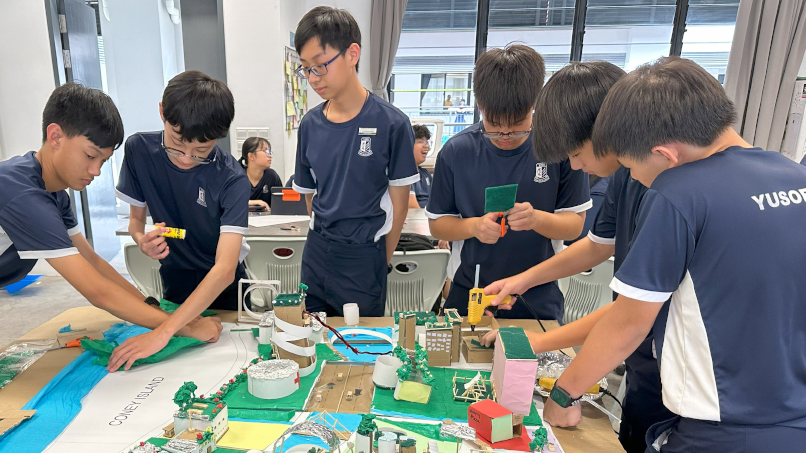
Students in action of putting their ideas into prototypes. Photo by Samuel Ong.


Problem Statements
1
How might students, in their STEMx Interdisciplinary Project Work (IPW), design a future Punggol that’s smart, sustainable, and has global appeal?
Stewarding the environment is sure to be one of the most pressing responsibilities of tomorrow’s leaders. As a complex and vast challenge, environmental leadership will require the full spectrum of 21st-century competencies. These range from core values, such as care and resilience; to social-emotional competencies like relationship management; to emerging competencies including critical thinking and global literacy.
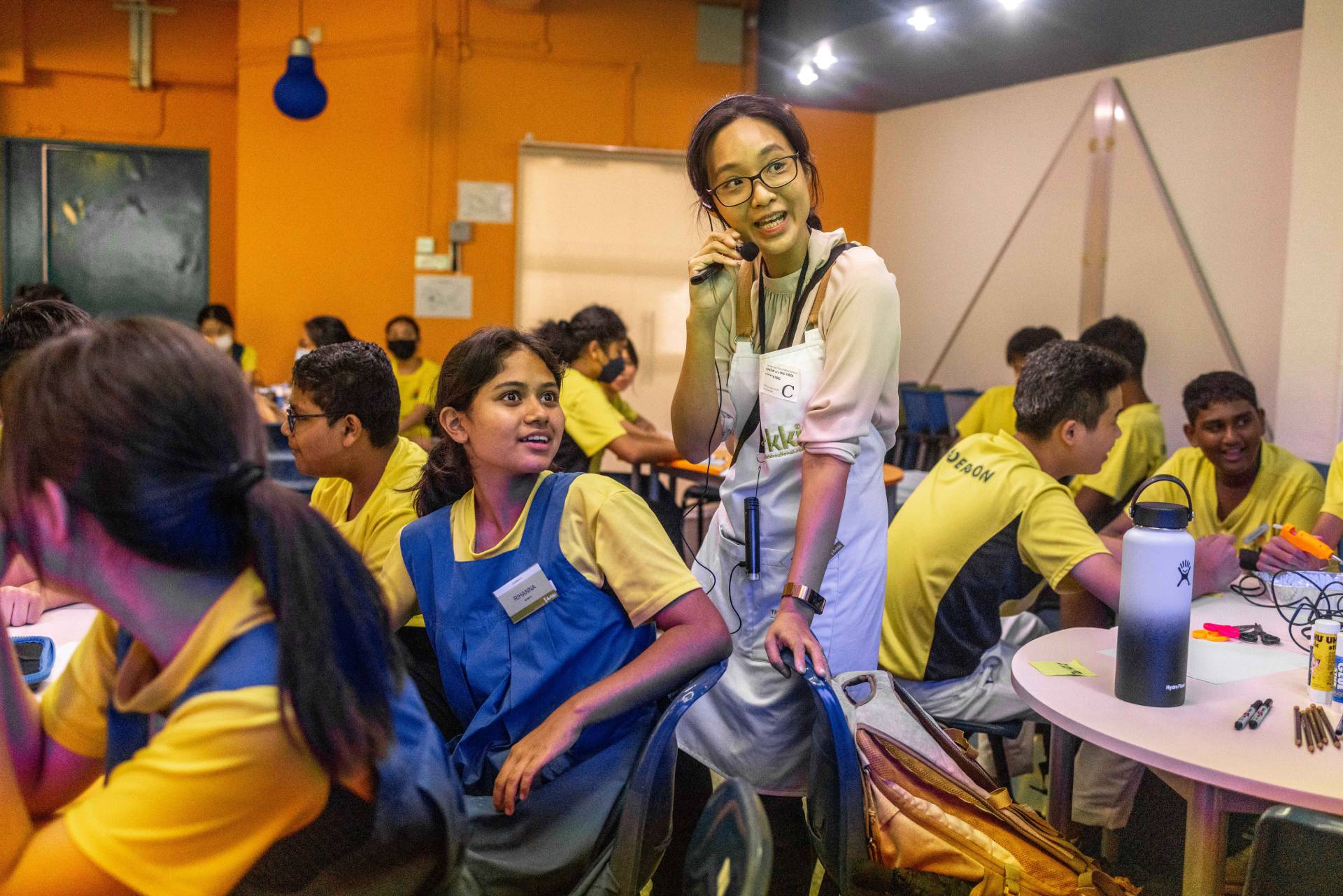
Educators at YISS understand that design thinking is pivotal to developing these values and competencies. That’s why they embedded it into their STEMx IPW for nine classes of Secondary 2 students. Led by programme partner Arkki, the students were given the challenge of reimagining their own neighbourhood using design thinking to address pressing Science, Technology, Engineering, and Mathematics (STEM) issues related to sustainability and climate change.
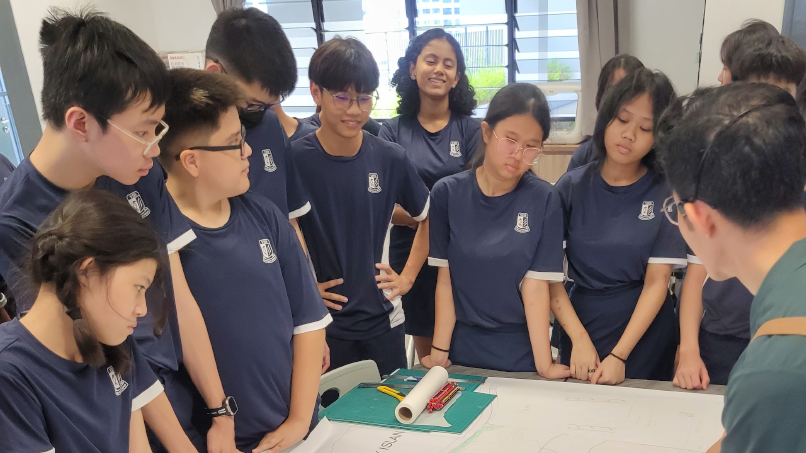
With guidance from industry partner Arkki, students explored what would make a future city work. Photo by Ng Yi Ting, Rachel.

Reimagining Punggol wasn’t just about learning facts – it was about giving students the skills, confidence, and real-world experience to shape a more sustainable future and make a difference in their community.
The range of student activities included:
• Design thinking sessions led by experienced facilitators engaged by Arkki;
• Learning journeys to the Urban Redevelopment Authority’s Singapore City Gallery;
• A solar panel workshop by Singapore University of Technology and Design; and
• An introductory workshop on artificial intelligence.
Each class was divided into groups to reimagine different plots of land in the neighbourhood. Using simple yet versatile prototyping materials, students quickly translated their ideas into tangible prototypes within the limited time available. After four days of brainstorming and design, they displayed their models in an inter-class showcase. Their passionate ideation and prototyping were clear to see!
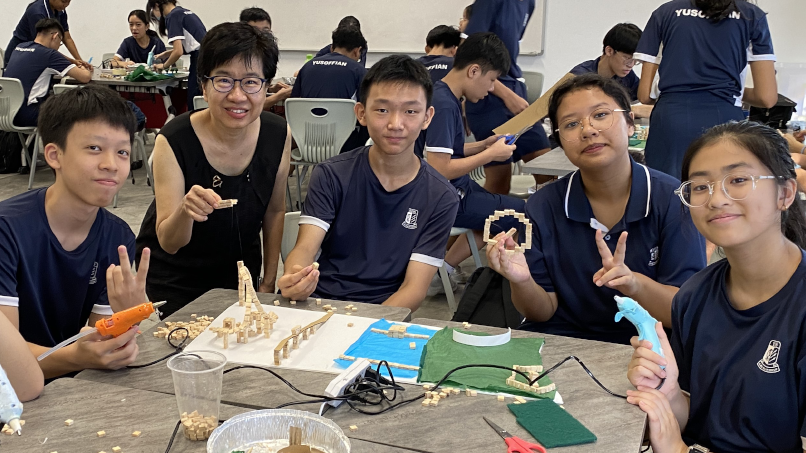
Student groups worked on ideas for different plots of land in Punggol. Prototyping with wooden blocks was a fast way to bring ideas to life. Photo by Li Weiyuan, Edwin.
YISS observed a meaningful impact on students as well as educators. The programme was a valuable lesson for educators in how design thinking can be effectively introduced, even when schedules are tight. The students’ high levels of enthusiasm and engagement led to greater interest from many educators to apply similar approaches across subjects. This is paving the way for more authentic and interdisciplinary learning experiences at YISS.
For students, the experience nurtured agency, innovation, and deep learning about sustainability and urban planning in Singapore’s context. They gained a practical understanding of design thinking and enhanced their critical thinking, collaboration, and communication skills. Developing creative, real-world solutions helped build a stronger sense of social and environmental responsibility.
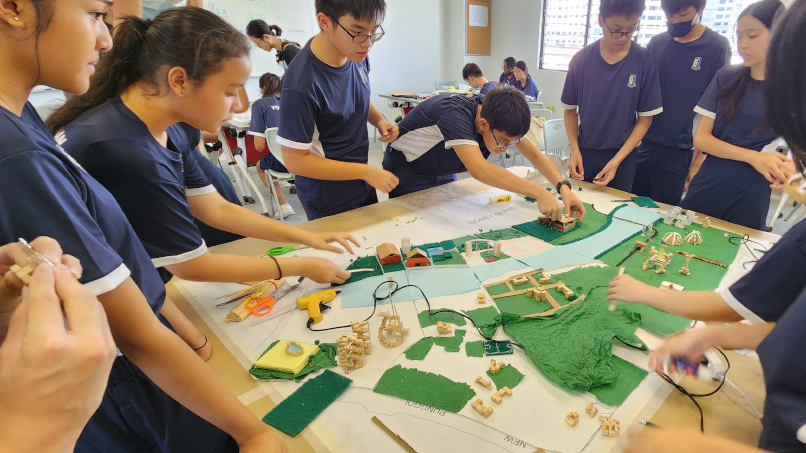
Students co-constructed their future city using creative teamwork. The separate plots of land were assembled into a larger model. Photo by Tan Sui Linn.
“I’m grateful for gaining the confidence to work and communicate better in a team.”
Secondary 2 Student
Yusof Ishak Secondary School
“IPW gave me space to look for innovative solutions that are both practical and impactful. The experience made me learn a lot about being insightful, innovative, and creative.”
Secondary 2 Student
Yusof Ishak Secondary School
“I am grateful for being able to work with people whom I normally don’t speak to – people with many different working styles and attitudes.”
Secondary 2 Student
Yusof Ishak Secondary School
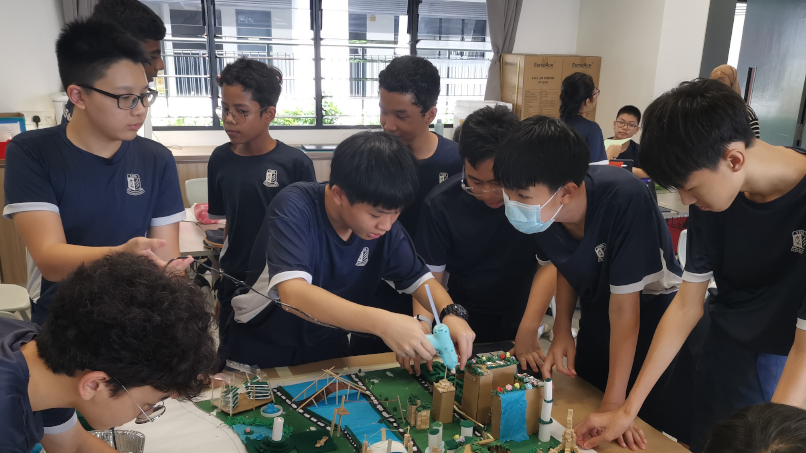
Students collaboratively put the finishing touches on their model of future Punggol. Photo by Teng Cheah Boon.
Key insights from YISS:
• Strong support from school leadership signals the importance of such initiatives and ensures the sustainability of level-wide programmes.
• Strategic integration of design thinking with existing programmes brings greater coherence and relevance. Connecting new mindsets to familiar contexts enhances student engagement.
• Purposeful framing around authentic local issues helps students see the relevance of their learning and fosters a sense of ownership, which is key for active problem solving.
• Emphasising the iterative nature of design thinking helps students develop resilience and a growth mindset.
• Supporting educators through training and collaborative planning is essential for successful implementation.
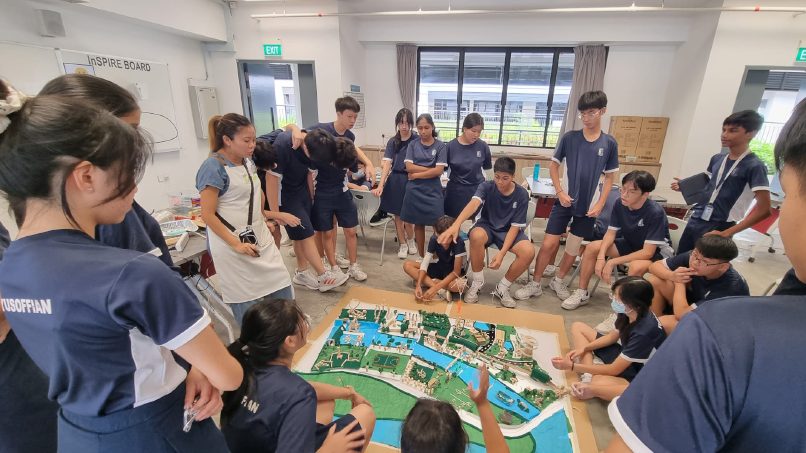
After completing their model, students had a thoughtful discussion about how their prototypes reflected their visions of a greener, smarter Punggol. Photo by Liu Shu Zhen.
Learning environment
• Culture of student collaboration; and
• Cultural shift toward student agency, innovation, and deeper learning.
Ecosystem support
• Industry partnership with Arkki;
• Learning journeys in real-world environments;
• Support from school leadership; and
• Professional development and collaborative planning for educators.
Pedagogy
• Real-world project work;
• Curriculum integration for design thinking; and
• Coordinated inter-disciplinary project work.


Programme Partner

Arkki
School

Yusof Ishak Secondary School