




WHAT HAPPENS WHEN LEARNING IS DEEPLY INTEGRATED ACROSS SUBJECTS?
Greenridge Primary School (GRPS) has an answer: cohesive student development! Over several years, the school iteratively improved its Applied Learning Programme (ALP) with an interdisciplinary approach, and the student outcomes speak for themselves. How did they do it?
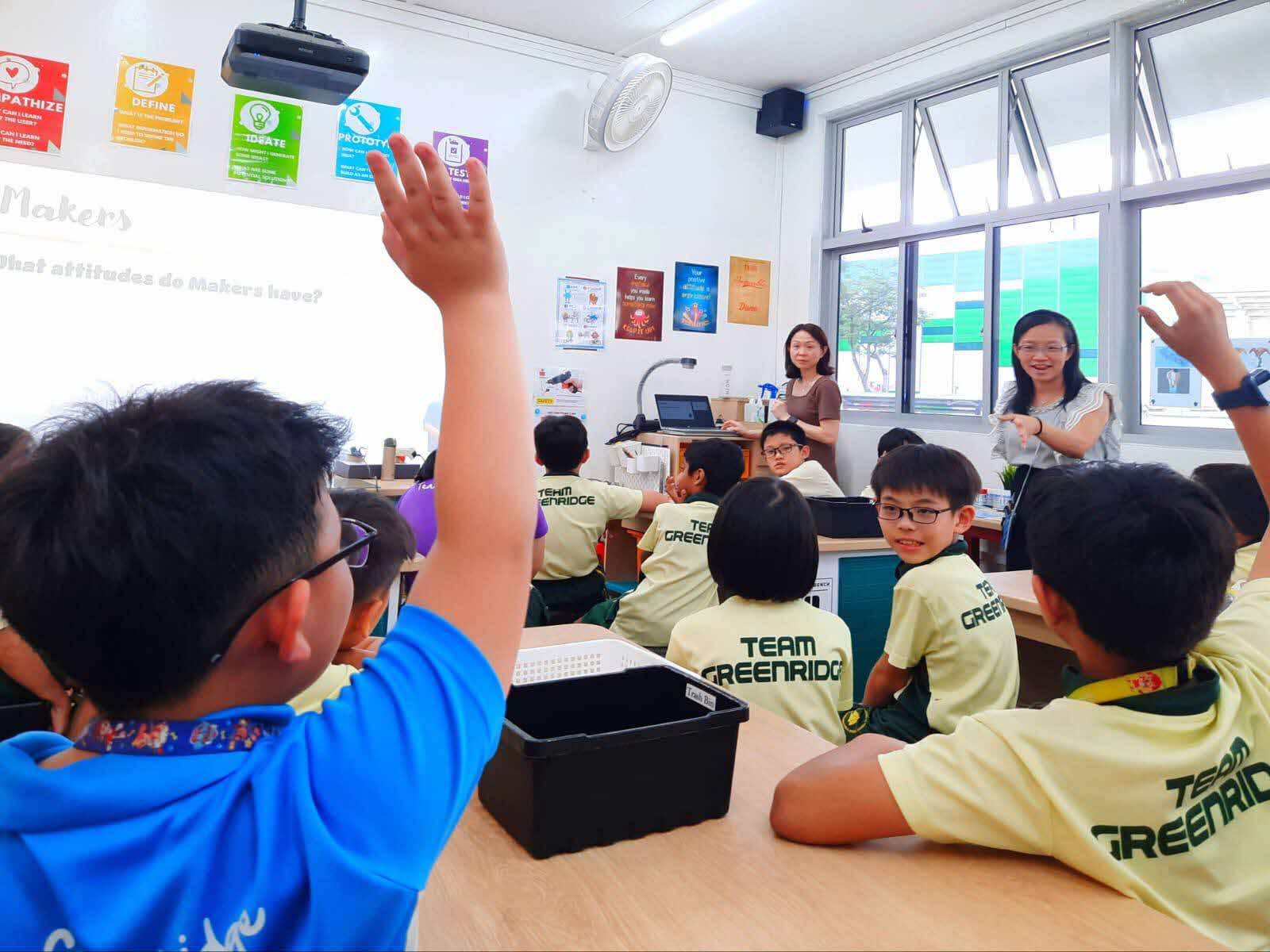
GRPS educators facilitating a discussion with students about maker attitudes, which include being resilient, empathetic, creative, and self-directed. Photo by Greenridge Primary School.


19 May 2026


Problem Statements
1
How might we iteratively improve the ALP to develop students who are empathetic, resilient, and effective at communication and collaboration?
2
How might we maintain coherence within the interdisciplinary nature of the programme to help students make connections, widen their perspectives, and nurture critical thinking and creative problem-solving skills?
Computational thinking, maker education, project work, student leadership, and Values in Action (VIA) – C.O.D.E.R.S, the ALP at GRPS, integrates them all.
On one hand, the programme enhances students’ critical thinking and creative problem-solving abilities. On the other, it emphasises the importance of serving the community and developing leadership skills.
It’s a well-rounded approach with tangible benefits to students’ development of emerging 21st century competencies (E21CC). But it wasn’t always that way. The school arrived at its interdisciplinary ALP structure through iterations of change, by thinking beyond subject silos and looking with a cohesive, future-ready lens.
As GRPS discovered, there are plenty of interdisciplinary links to be found between skillsets and learning outcomes. Maker education is a powerful glue to bind them all together.
In September last year, GRPS is proud to introduce COVE 2.0, a newly upgraded makerspace. Refreshed to accommodate a larger student volume during recess and after school interest groups, the space has been transformed into a vibrant hub with distinct zones for tinkering, 3D printing, and complex paper engineering.
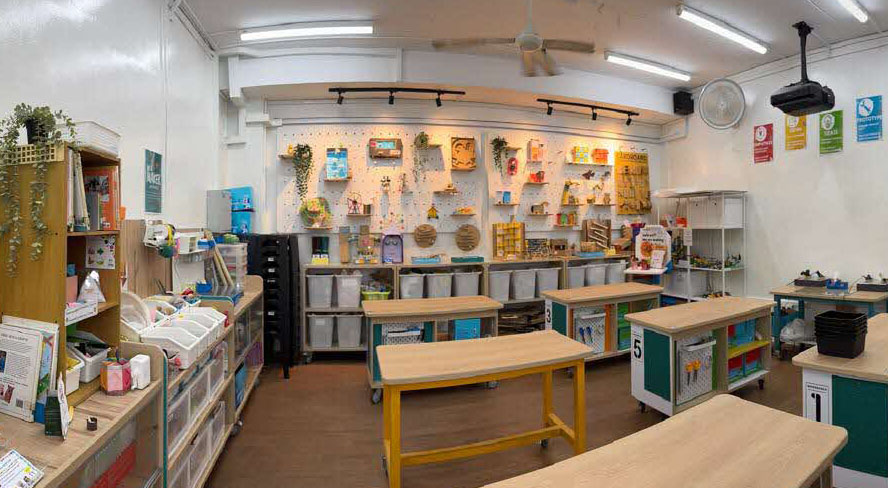
The makerspace at GRPS is called COVE (Caring Oasis for Values Education). Photo by Greenridge Primary School.
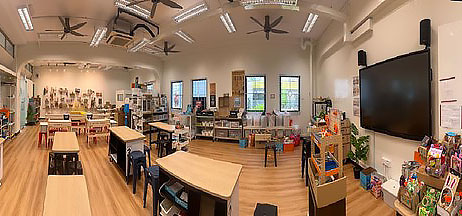
Revamp of COVE in September 2025. Photo by Greenridge Primary School.

The ALP at GRPS is focused on health science and serves all students, from Primary 1 to Primary 6. When it was launched in 2020, it was centred on computational thinking. Students were introduced to various tools: programmable robots like Kubo, coding platforms such as Scratch and Scratch Junior, and microcontrollers like the Micro:bit.
In 2021, the school revised the programme to strengthen its character education component. The realigned ALP beautifully complements the school’s Learning for Life Programme (LLP), which nurtures ethical leaders and emphasises community service.
An even closer integration between the ALP and LLP was introduced in 2022 when GRPS incorporated 21st century competencies (21CC) development. A natural coherence between the programmes emerged from the integration of skillsets and learning outcomes.

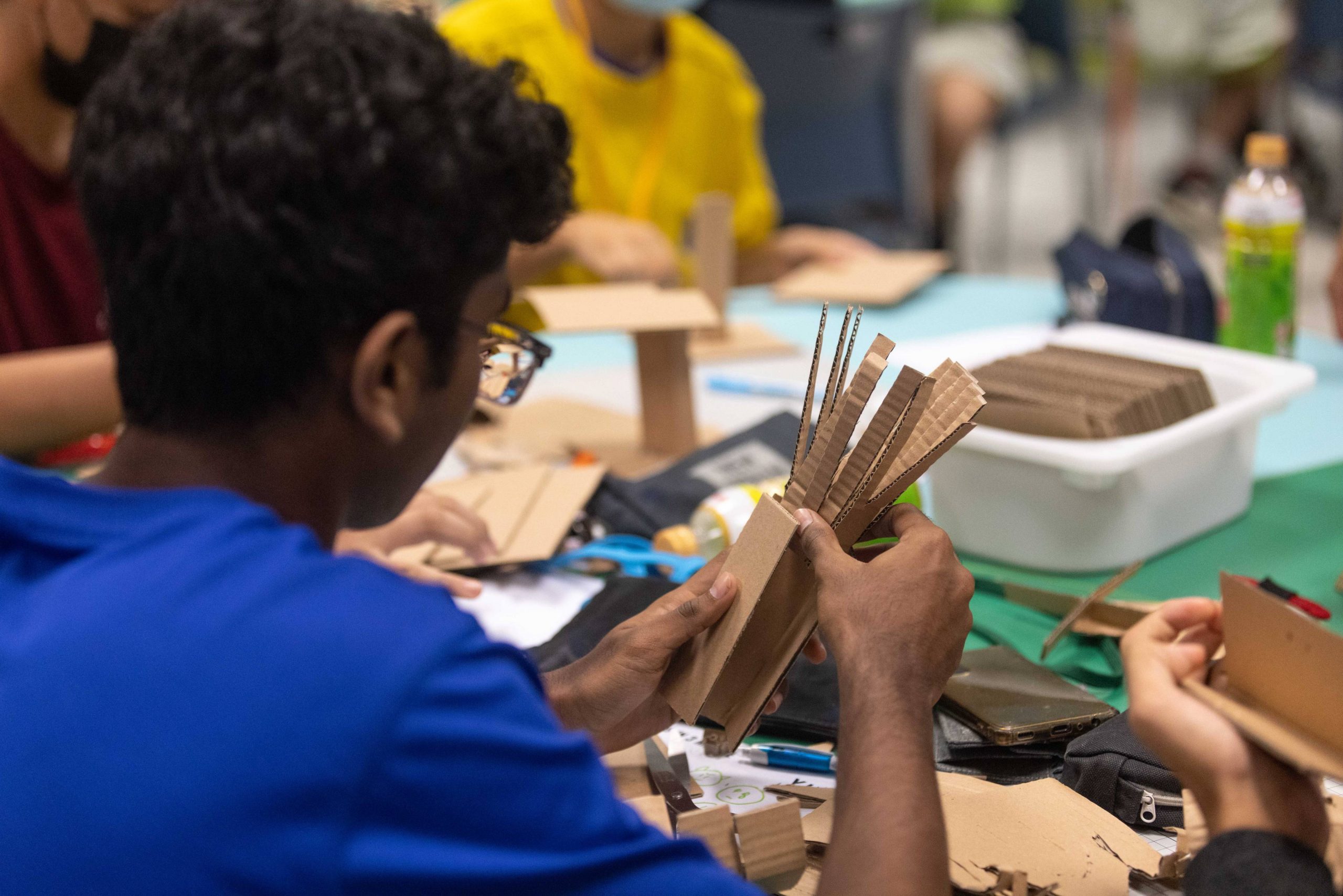
Students working on their ALP CO.D.E.R.S within the COVE makerspace. Photo by Greenridge Primary School.
From that point, upper primary students embarked on more sophisticated interdisciplinary projects. They worked across subjects like physical education and science to create targeted solutions for community needs.
Authentic learning experiences were also introduced. For instance, students developed step trackers for the elderly by applying their scientific knowledge and learning to understand what people really need. The result? An enhancement of critical, adaptive, and inventive thinking, the honing of problem-solving and collaborative skills, and deepened empathy.
The most recent iteration of the ALP came in 2023, when GRPS prioritised student agency through the appointment of maker ambassadors. At school-wide events, including MakerFest and anniversary celebrations, these ambassadors develop their public speaking skills and self-confidence by showcasing and championing maker projects.
There are a lot of fun things we can do in COVE. It allows us to unleash our imagination to create interesting stuff that cannot be created during regular lessons.
Chan Yi Ming
Student
The most interesting part of the activity is when I can discuss with my friend how to design it, and after that, personalise it myself.
Lucas Zeng
Former Student
I’ve learnt to always be creative and have resilience in you when it comes to [tackling] problems.
Tan Wen Han
Former Student
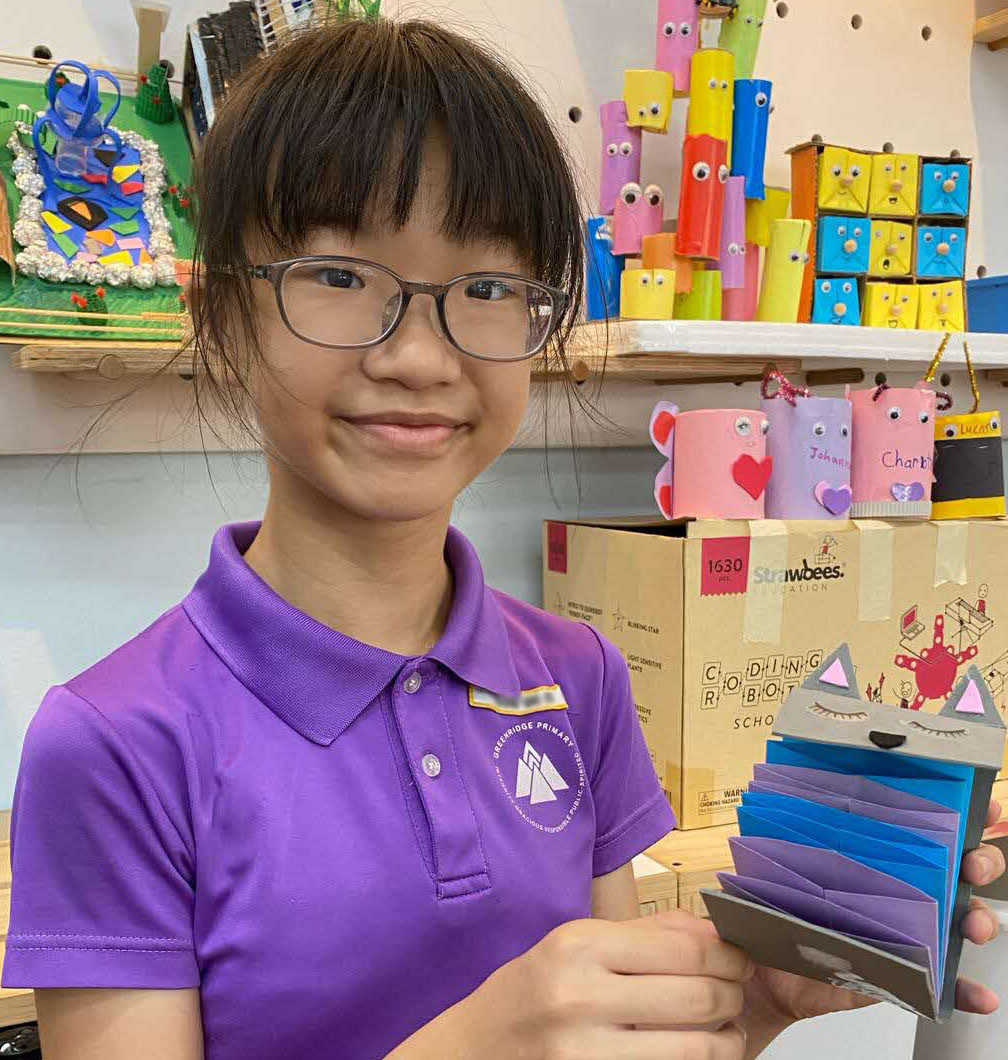
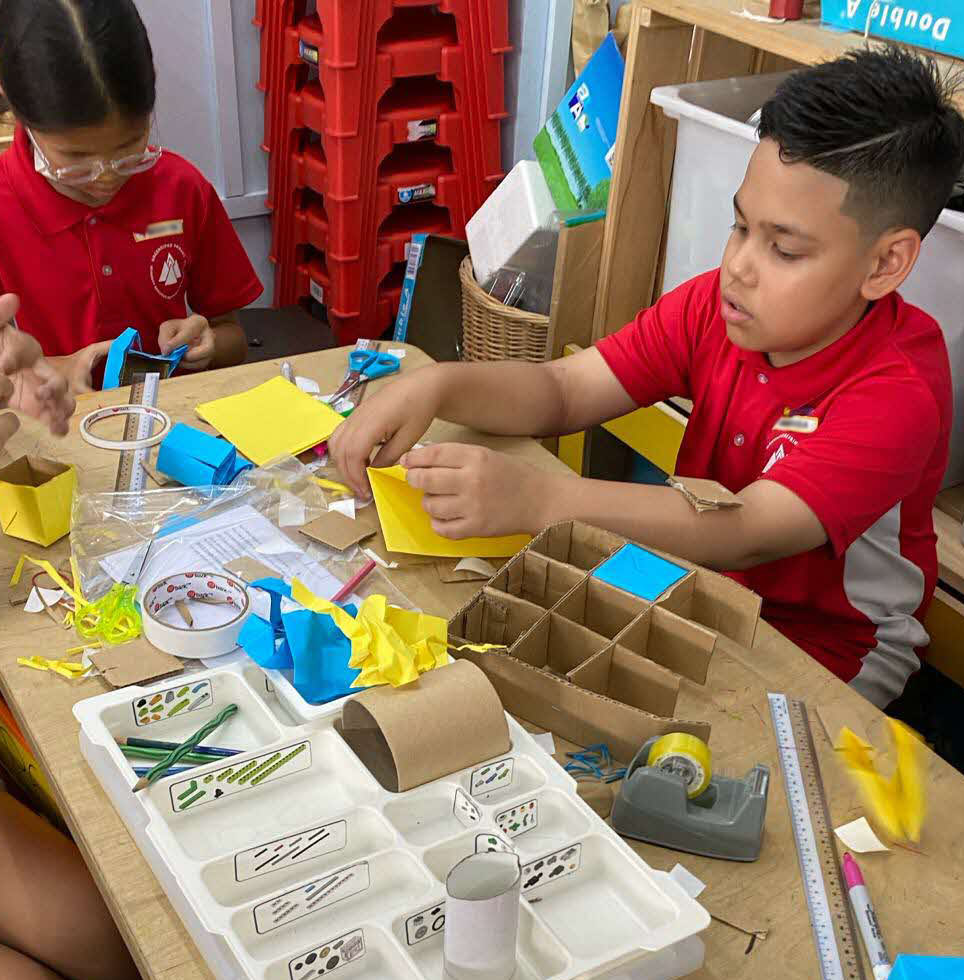
Right: A student proudly showcases her paper wallet prototype. Left: Students collaborate on a group project, making a prototype chest of drawers. Photos by Greenridge Primary School.
What have GRPS educators observed in their students over the years? They’ve seen students’ prototypes increase in fidelity, complexity, and user-centric design. They’ve seen increased participation in making activities – and palpable student disappointment when the makerspace is closed!
They’ve seen how advanced students are becoming more confident in applying their critical thinking skills to higher-level challenges. And they’ve seen their students’ achievements rewarded beyond the school. In 2024, for example, GRPS students were recognised in the STEM Playground Challenge and the Sony Creative Science Award.
Most satisfyingly, educators have watched their students transition from passive learners to active creators, demonstrating the ability to design, code, and refine innovative projects while giving heart and mind to serving the community. It’s a great recipe for nurturing tomorrow’s leaders.
In conjunction with the school’s 30th Anniversary in November 2025, Minister of State for Digital Development and Information & Health, Mdm Rahayu Mahzam, officially inaugurated COVE 2.0 with the unveiling of a commemorative plaque. The space also hosted the Hackathon Grand Finals, where students utilised the interactive displays to showcase innovative Scratch and Roblox projects focused on fostering a growth mindset.
Through the makerspace, Greenridgeans are honing the skills and heart needed to serve those around them—empowering them to grow as Caring Leaders who create meaningful solutions for the community.
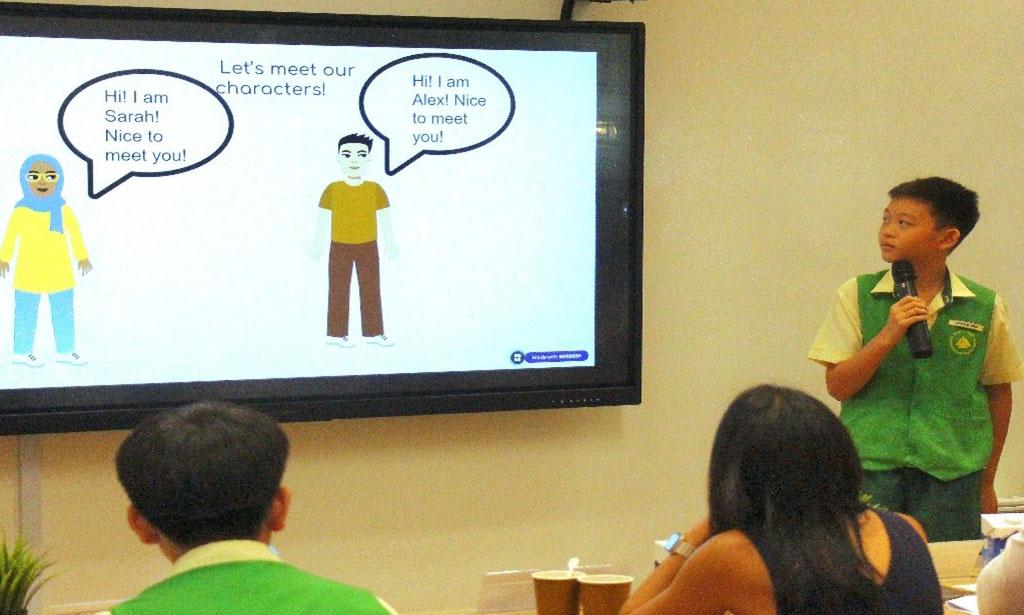
A GRPS Hackathon finalist proudly sharing his Scratch project on fostering Growth Mindset during the Hackathon Grand Finals. Photo by Greenridge Primary School.

MOS Rahayu officiated the launch of COVE 2.0 with the commemorative plaque unveiling. Photo by Greenridge Primary School.
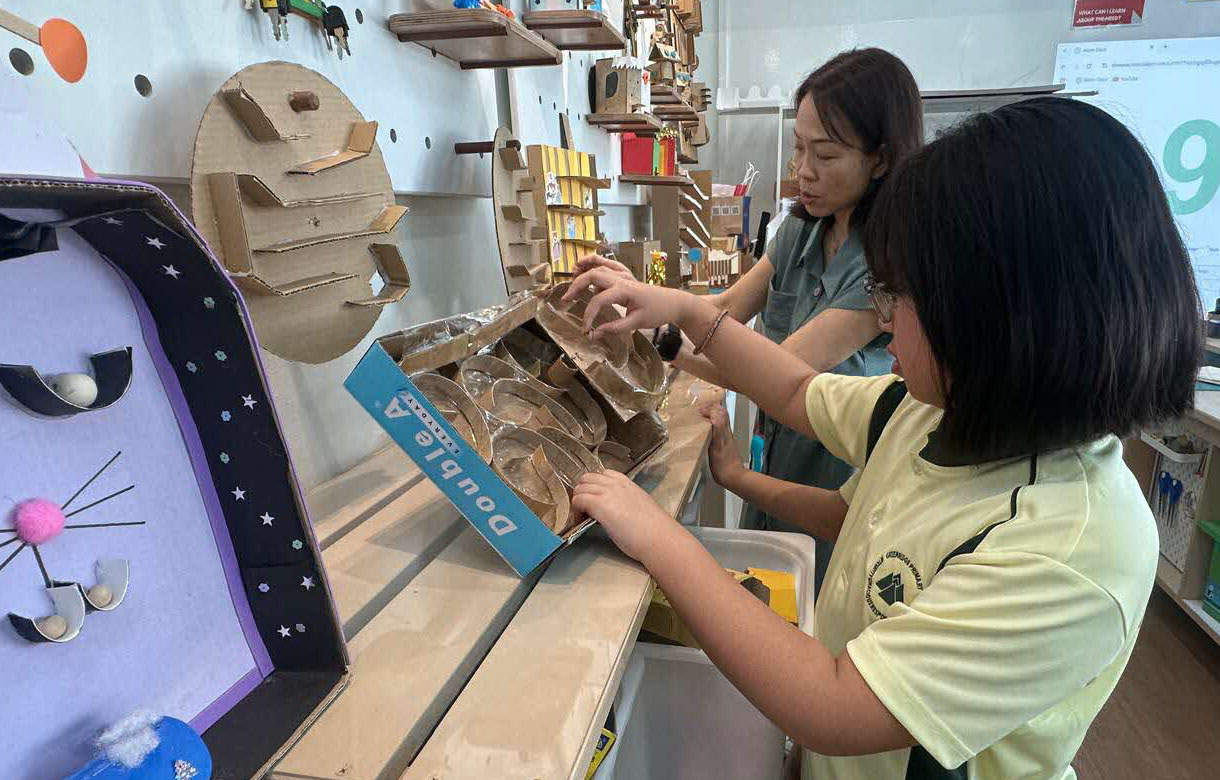
A student tests out a marble run prototype with educator feedback. Photo by Greenridge Primary School.
We provide opportunities, activities and experiences to empower students in their aspirations, strengths and interests.
Mdm Flora Ong
Principal
When students are doing the Makers activities, I can see the sparks in their eyes. This is exactly what the joy of learning is all about.
Mr Andy Ang
Former Vice-Principal Administration
A makerspace is where imagination meets action, turning ideas into reality with every tool, and every creation.
Mdm Vivienne Yap
Head of Department for EdTech and 21CC
During the making process, students leverage on the ‘hard skills’ that they have mastered to demonstrate their ‘heart’ for others.
Mr Alfred Ong
Former Head of Department for ICT
It is a safe space where students can learn from mistakes and think creatively to solve challenges along the way.
Mdm Koh Ai Teng
Makerspace Teacher
In makerspace, our students gather to share their knowledge, brainstorm and bring ideas to life through hands-on learning and design.
Mdm Toh Pei San
Makerspace Teacher
The makerspace is not just a space, it is a certain set of dispositions that you bring forward to the class to be creative and to be innovative.
Dr Michael Tan, Research Scientist
National Institute of Education
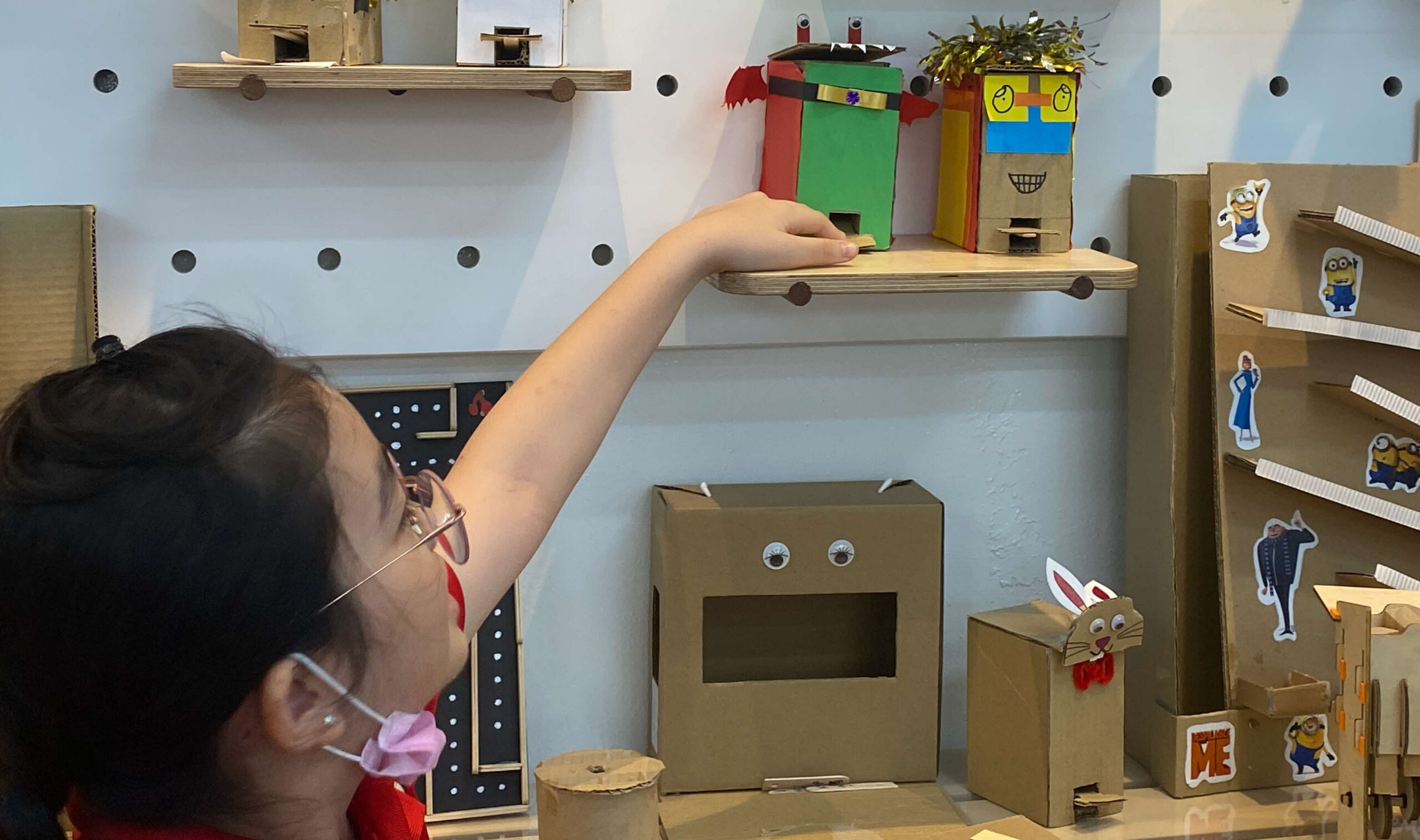
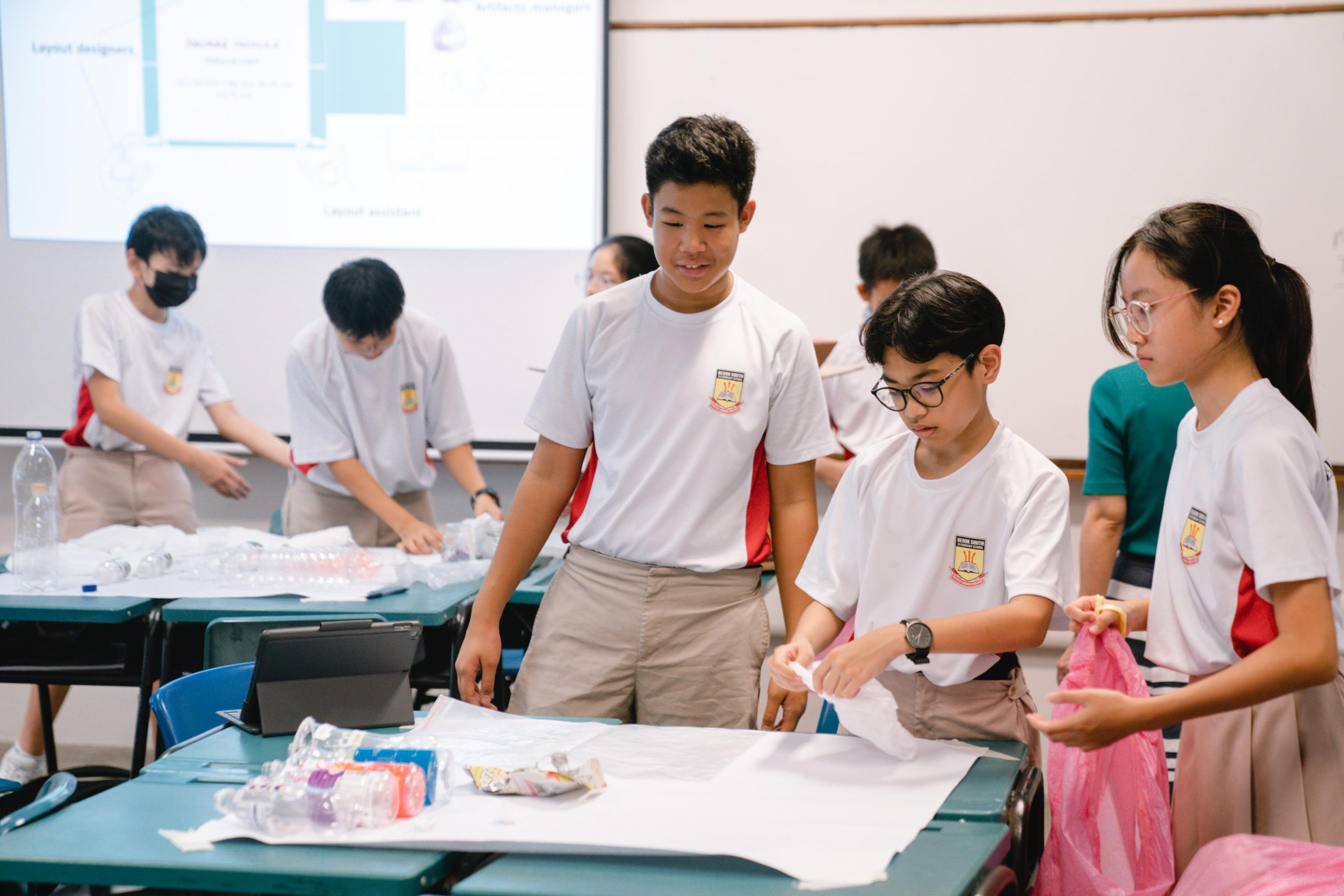
A student admires and interacts with a bin prototype on the makerspace display wall. Photo by Emmerlyn Ong.
Learning environment

Learning designed to connect knowledge with character formation;
Learning taken into real-world contexts; and
Culture of student collaboration.
Ecosystem support
Whole-school alignment on interdisciplinary approach; and
Iterative process of programme improvement.
Pedagogy
Coordinated interdisciplinary project work; and
Guidance from educators through the design thinking process and prototype development.