






Could understanding others be our Superpower?
Dunman Secondary School students discovered that when they build empathy, they can find ways to break down social and technological barriers. Their rewarding journey highlighted how design has a role in fostering a sense of belonging for all.
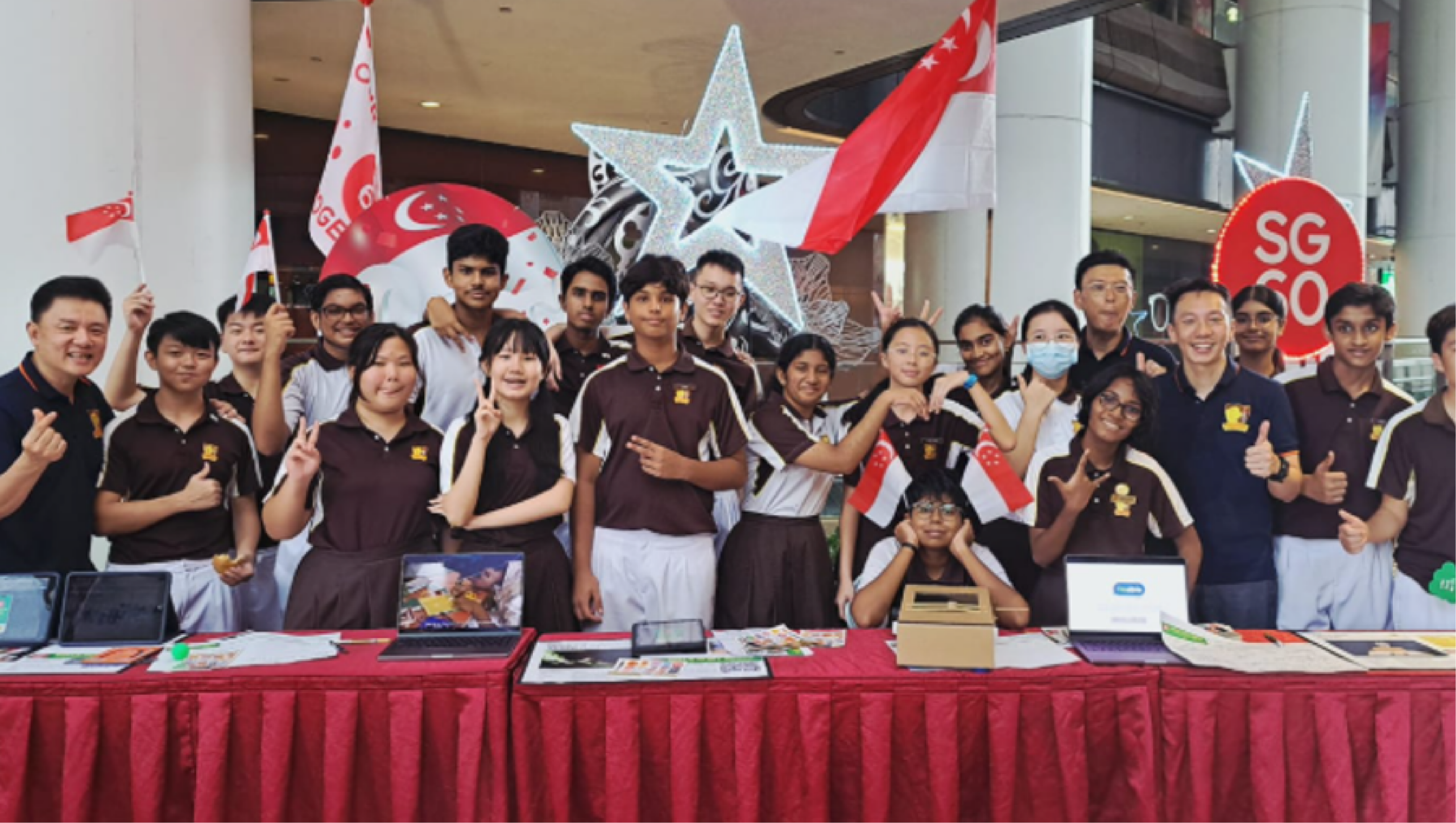
Dunman Secondary School students proudly showcased their empathy-driven projects and app to the public in a special SG60 showcase at Our Tampines Hub. Photo by Dunman Secondary School.


07 Aug 2026


2025 was a big year for Dunman Secondary School students – and not just because of SG60. This was the year they discovered valuable new perspectives by completing a meaningful community-based challenge in Learning by Design’s Real World Co-design Platform.
Adhering to the challenge set by sponsor SG Enable, the students designed inclusive ways to connect with persons who have disabilities – specifically, mild intellectual disabilities. Learning to cultivate their empathy was a memorable emotional journey for the Secondary two and three students, and a powerful way to experience interdisciplinary project work and service learning.
That’s not all that was achieved. Following SG Enable’s challenge, the so-called “tech champs” of the student cohort took the interactive physical artefacts into the digital world by participating in the Figma Design Challenge. That’s where they learned new competencies in user-interface (UI) and user-experience (UX) design, as well as the emerging field of vibe coding using artificial intelligence (AI) and natural language prompts. They received the People’s Choice Award for their app, “Walk in my Shoes: Designing for Empathy.”
What a journey! You’d never guess that at the start of it all, nervousness was rife. But it was quickly overcome as the students developed their understanding of a community they previously felt little connection with.
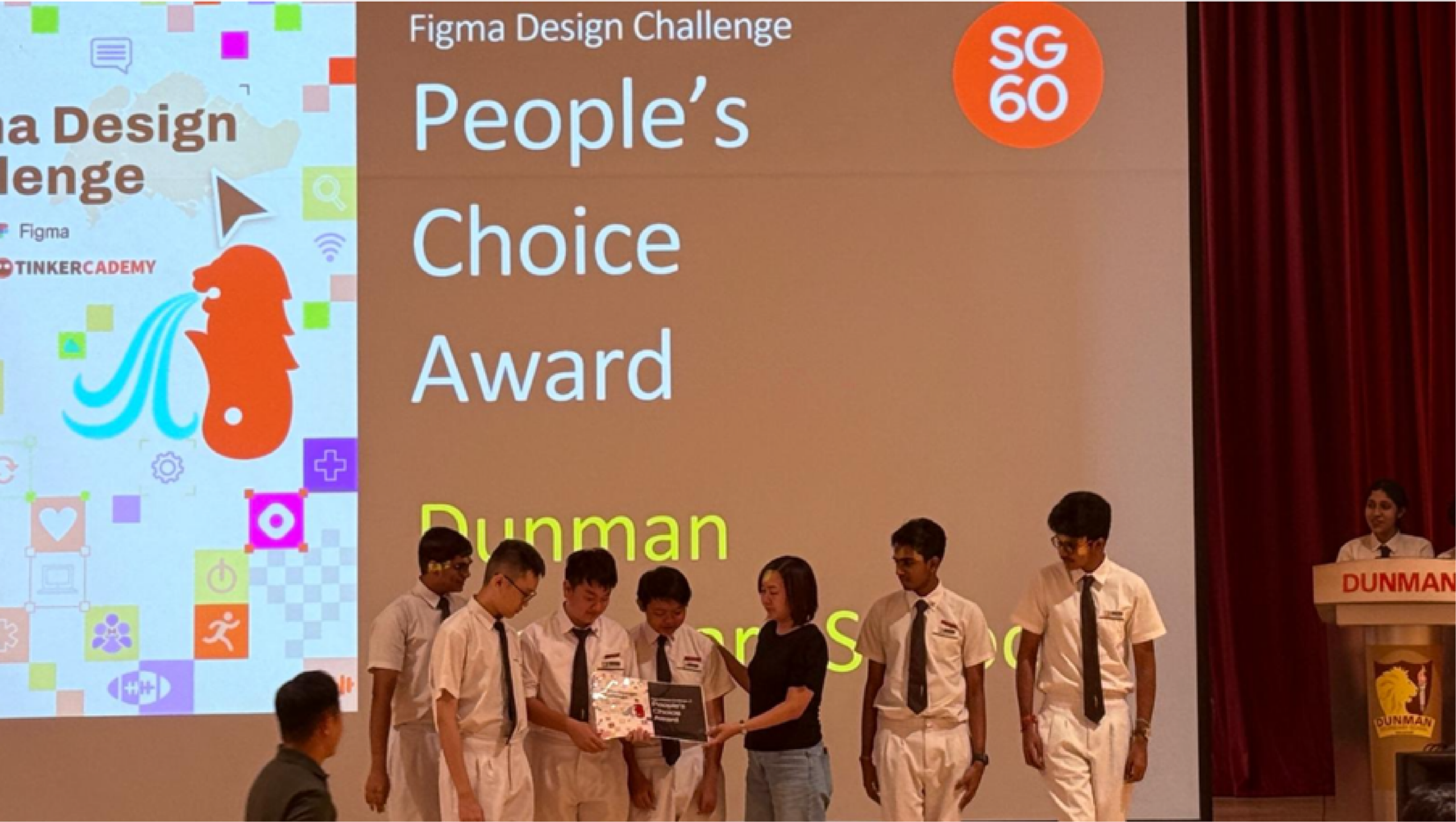
The app created by Dunman Secondary School students in the Figma Design Challenge struck a chord with people by encouraging them to move beyond awareness toward genuine empathy. Photo by Gabriel Sim.

Dunman partnered up with social impact organisation VIVITA for the Real World Co-design Platform challenge and worked in association with APSN (Association for People with Special Needs) Katong School.
Their specific challenge statement was this: How might we design an interactive educational experience to bridge the knowledge gap and foster a deeper understanding of persons with mild intellectual disabilities?
The students embarked on learning journeys, school tour interviews and discussions with APSN Katong School students, and hands-on experiences where they shared their creations. They built their capacity to empathise with their new friends at APSN Katong School, and it changed their points of view considerably.
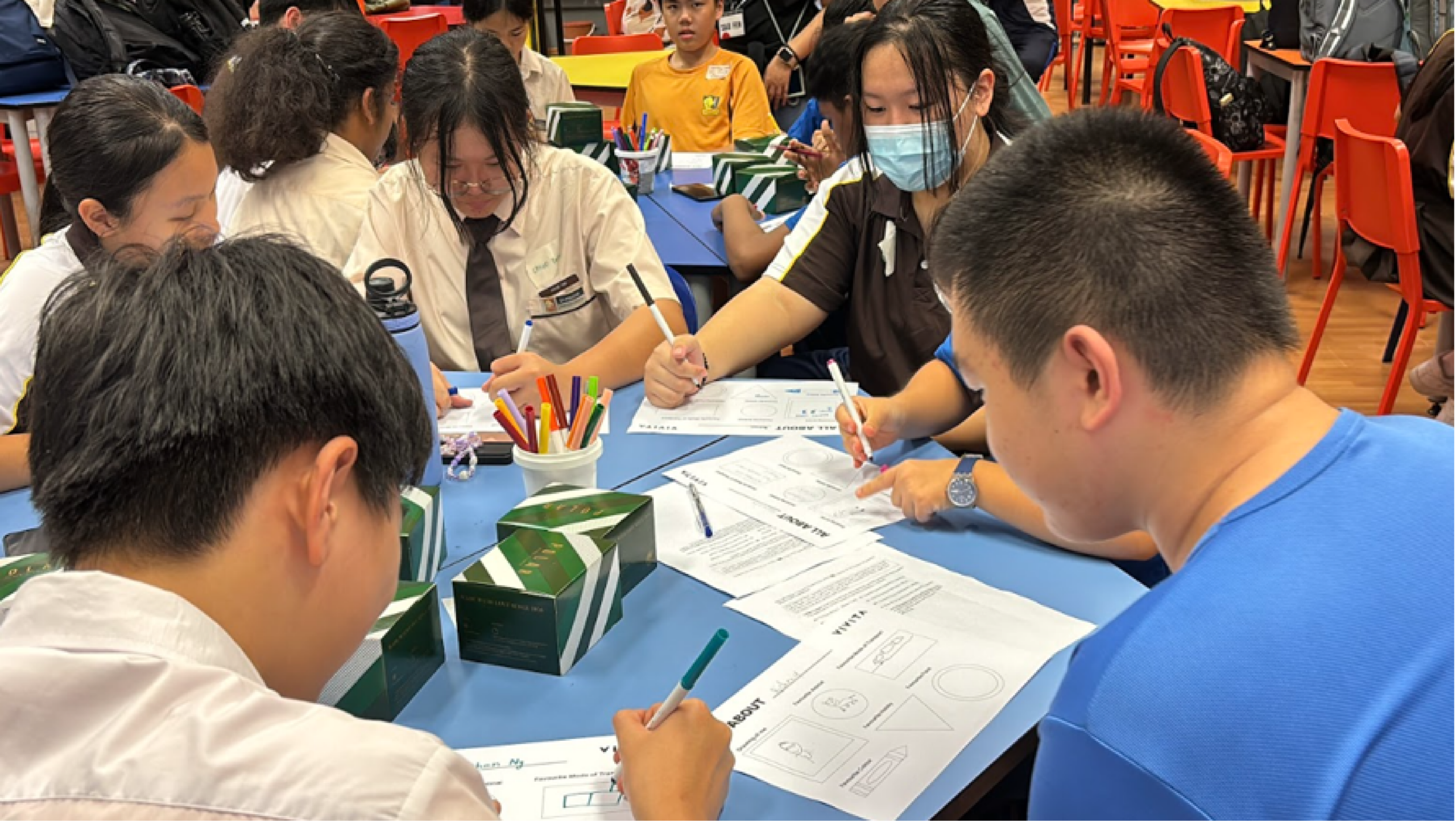
Students from Dunman Secondary School and Katong School collaborated via interviews and discussions, aided by course materials from Vivita. Photo by Jasmine Quek.
We learnt not to judge, but to journey together – breaking limits through understanding and compassion.
Student Team Breaking Limit
Dunman Secondary School
Through the power of support, we discovered that true strength comes from lifting others, not leaving them behind.
Student Team Power of Support
Dunman Secondary School
The artefacts they created were all designed to help the public feel and connect with the daily challenges and emotions experienced by individuals with special needs. Through multiple rounds of research, prototyping, feedback, and refinement, the designs evolved to create interactive encounters that allow participants to step into someone else’s world.
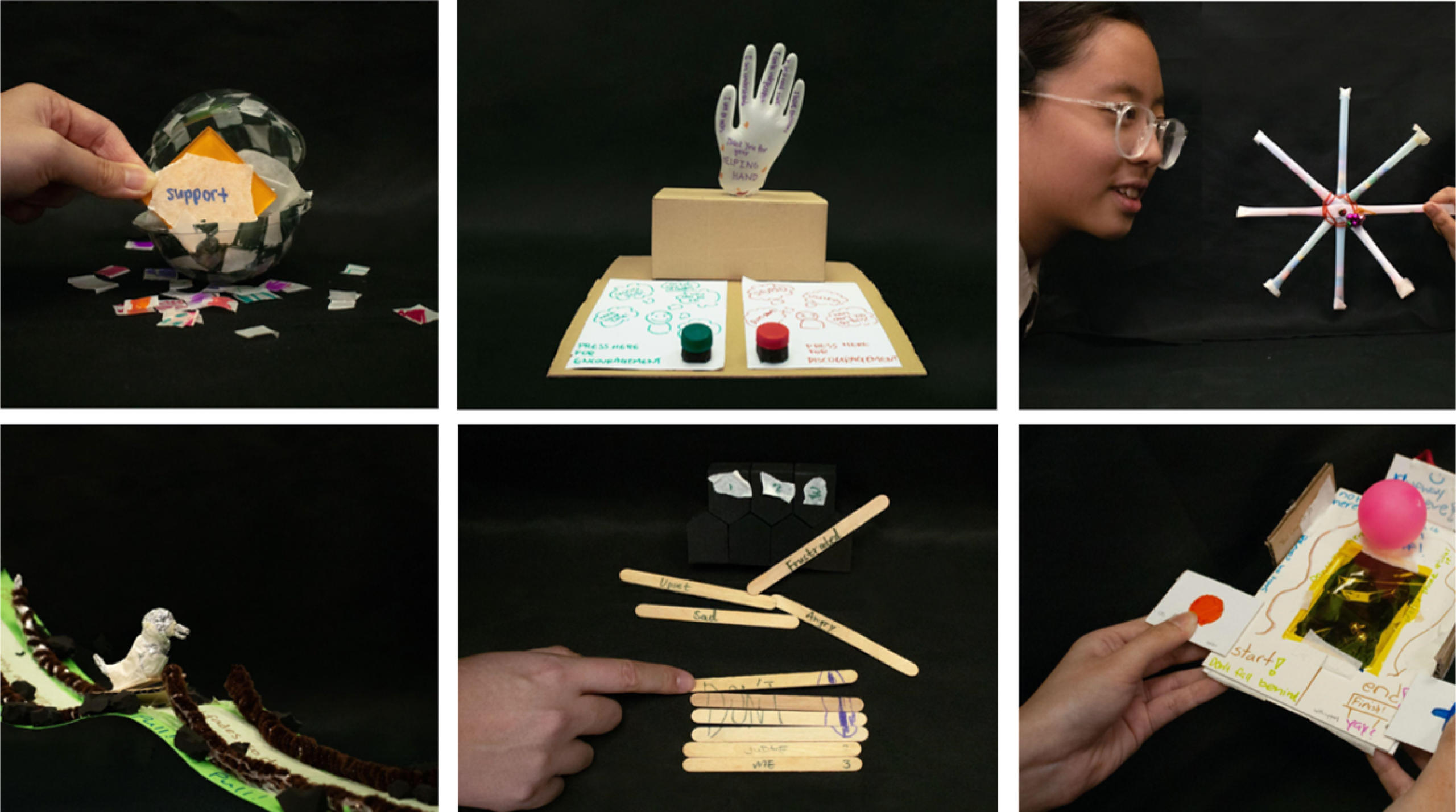
The students’ artefacts, clockwise from top left: “Breaking the Limits,” “Helping Hand,” “Focus in Motion,” “The Power of Support,” “Don’t Judge,” and “Ducky’s Adventure.” The projects can all be viewed in the “Walk in my Shoes” app. Photos by Jasmine Quek.
For example, “Ducky’s Adventure” models inclusivity. As a tab is pulled, a duck moves forward and a poem is revealed. When the pulling stops, so do the duck and the poem, illustrating disruption to a social journey.
“Focus in Motion” is a tactile device with beads and bells that was designed to distract. It offers a tangible simulation of the real-world distractions encountered by persons with mild intellectual disabilities
Emotions ran high as the Dunman students showcased their group projects to the Katong students. But the journey wasn’t over yet. Head of Department for Character and Citizenship Education (HOD CCE), Mr Gabriel Sim, could see another pathway to empathy building – creating an app to showcase the projects through the Figma Design Challenge.
In this challenge (which was supported by the Infocomm Media Development Authority through its LEARN Roadmap i.e. Code of Fun Programme), students who were previously taught Figma coding from the coding experts in Tinkercademy applied their learning and used empathy mapping to design the app.
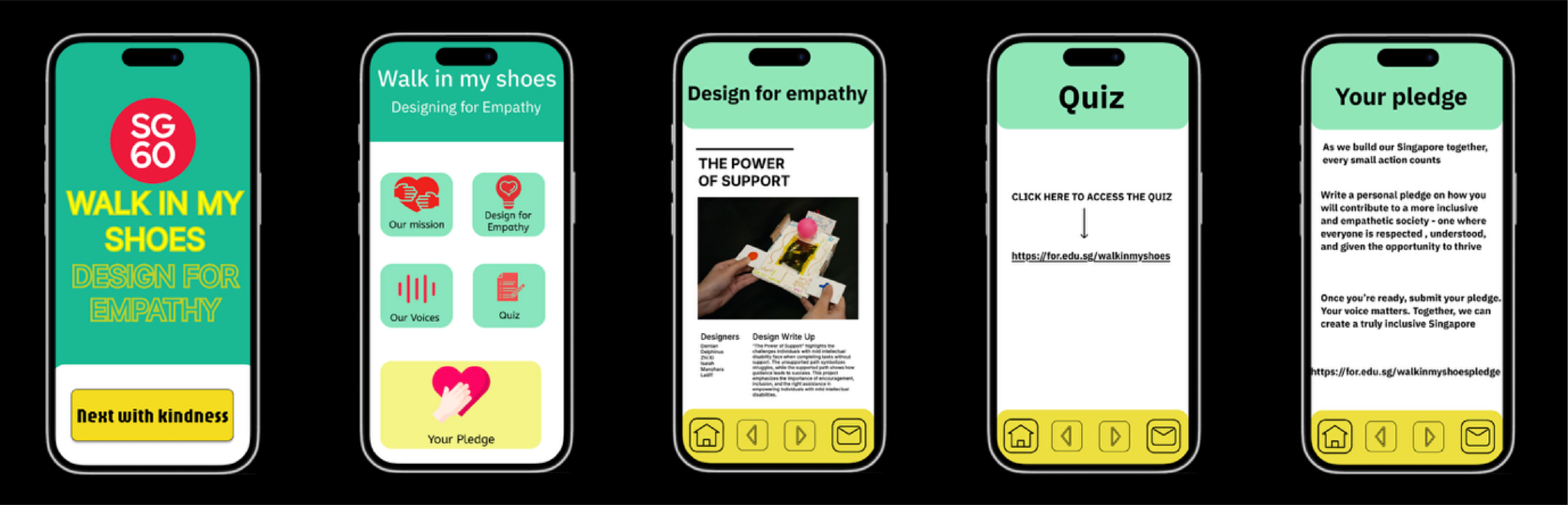
The “Walk in my Shoes” app showcases the students’ artefacts and invites meaningful participation. Images courtesy of Dunman Secondary School.
The “Walk in my Shoes” app spreads the message of inclusivity, being designed with easy navigation and invitations to contribute to knowledge and empathy building via a quiz and a pledge.
I feel inspired to see the next generation of innovators that Singapore will be able to generate.
R&D Group Head
Procter & Gamble
I think the project … helps us to understand the meaning of empathy and how we should feel and act when we come across people of different needs.
Community Resident
With such a multi-layered project, there were bound to be challenges along the way. Managing multiple partners, coordinating schedules and communications, closing technical skills gaps, and keeping all parties motivated across all stages of the project were the main ones.
But the dedication and support of educators and partners was a key enabler of success. The real-world exposure gained through collaboration between schools, organisations, and community partners enabled a rich and authentic learning environment – another critical success factor. So too was the structure provided by educators, who ensured a safe environment and kept students inspired.
Dunman’s school vision statement, “Empathetic Leaders, Impactful Innovators,” points to the critical role the school sees in empathy. Says Sim, “Not only does empathy prepare students for real-world collaboration; it’s going to be essential in the AI and tech-driven future. Empathy matters because it leads to inclusive, human-centred design.”
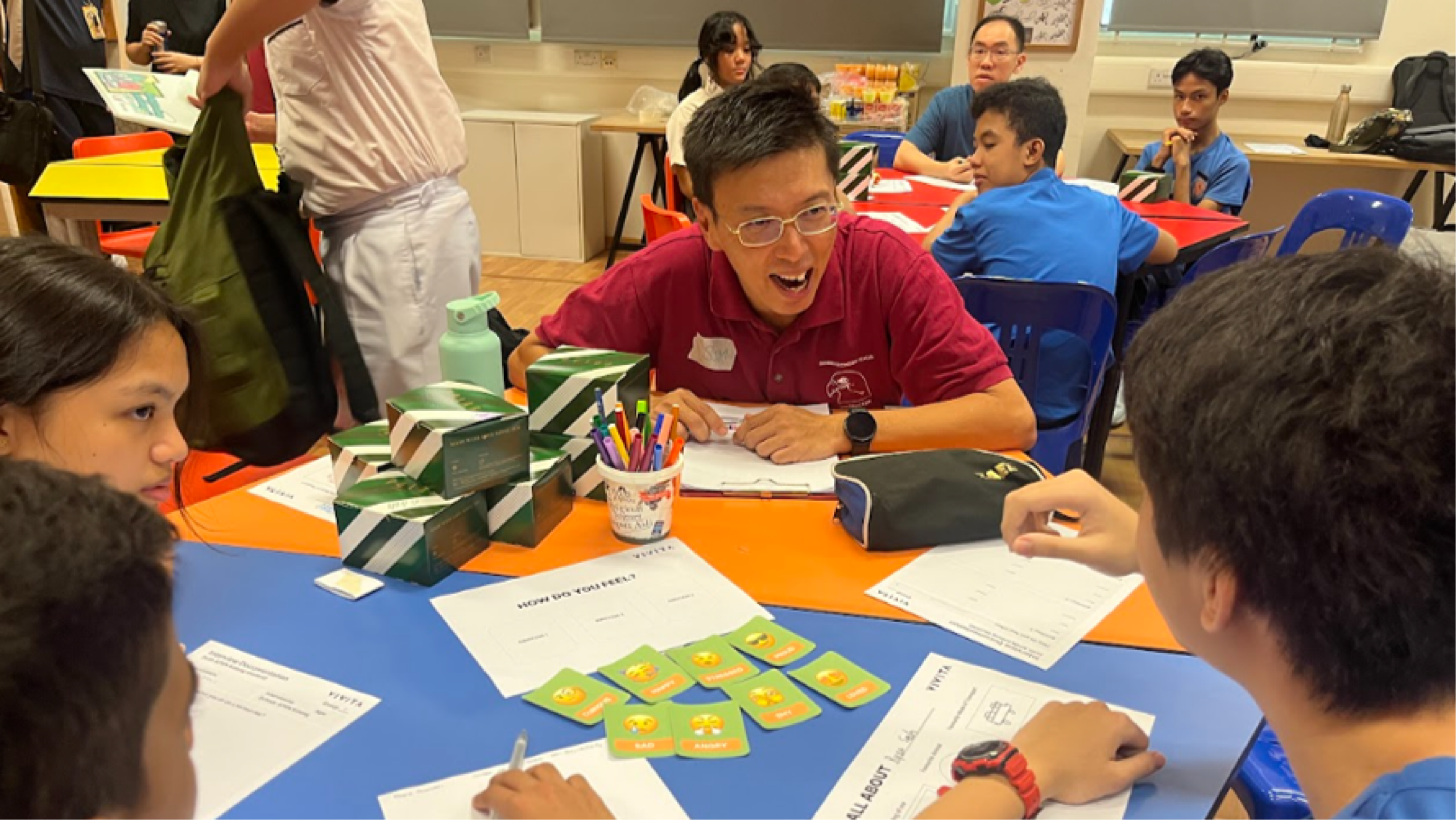
Educator Mr Gabriel Sim supported Dunman Secondary School and Katong School students as they went through the process of understanding each other’s thoughts and feelings. Photo by Jasmine Quek.
Armed with a strong sense of readiness, courage, and community, FCP is looking to continue their successful endeavour with design thinking by carefully scaling the programme throughout Primary 5. Onward they go, together.
Empathy is all about connection building. Through vulnerability, connection leads to an understanding of varied perspectives. This fuels meaningful design. Inclusive innovation happens when there is understanding
Mr Gabriel Sim, HOD CCE
Dunman Secondary School
You might also like
Local
For Principal Rebecca Chew, design thinking is the way ahead
03 Dec 2024
Local
The creative ally that reshaped a school’s Applied Learning Programme
16 Jan 2025
Local
The Vice Principal who inspires innovation through empathy
30 Jun 2025

Media
Better Life by Design Ep. #1: Umbrella for Uncle Soh
How does this umbrella designed by the students of Cedar Girls Secondary School help their elderly neighbour? Hint: It does more than protect him from the sun and rain. Watch the video to find out exactly what the girls have been up to!
19 Nov 2024


