




FROM AWARENESS TO EMPATHY AND ACTION!
How do you build empathy in a meaningful way that really resonates with young people? At Yuhua Secondary School (YHSS), design thinking is the answer to activating tomorrow’s proactive changemakers.
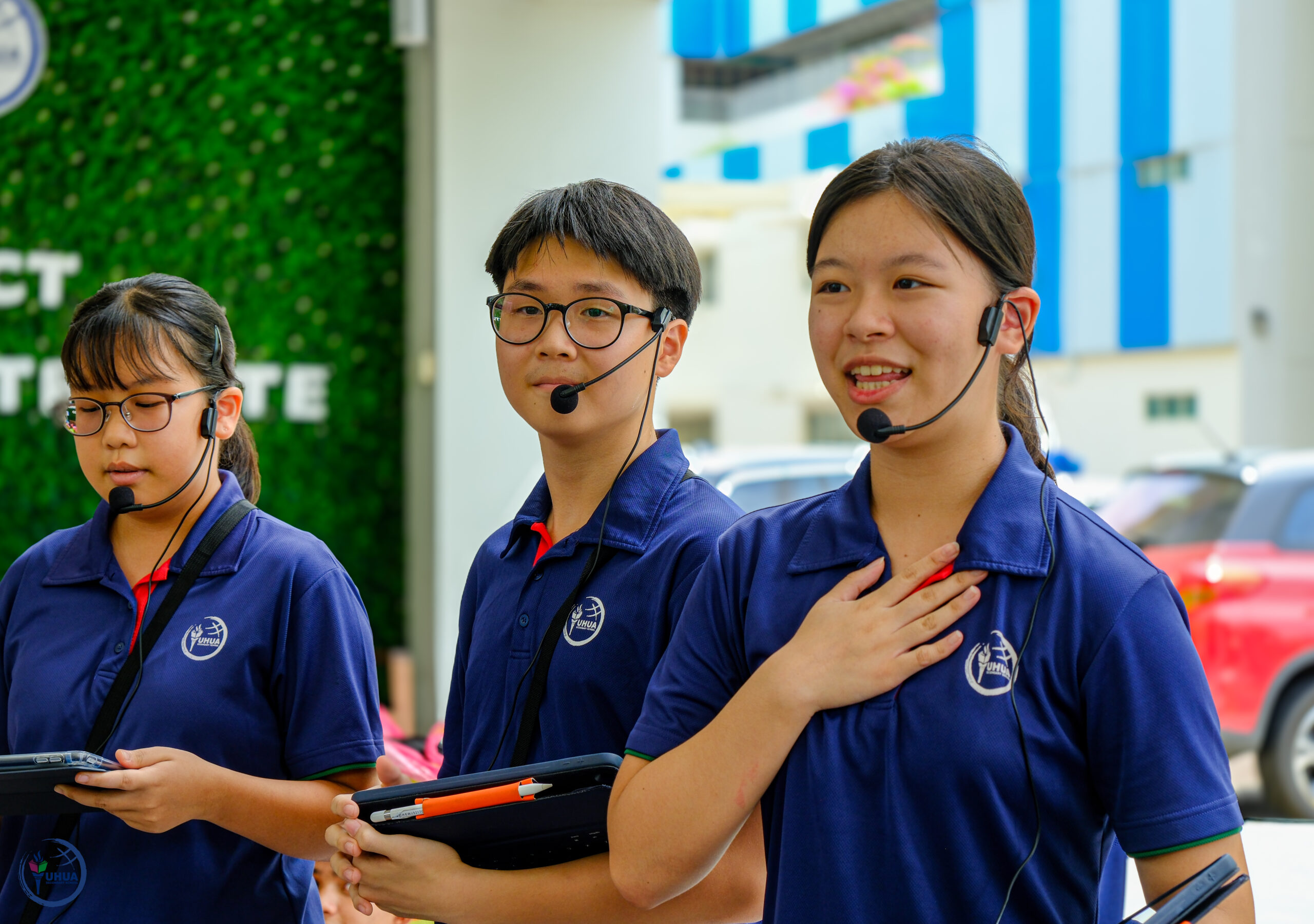
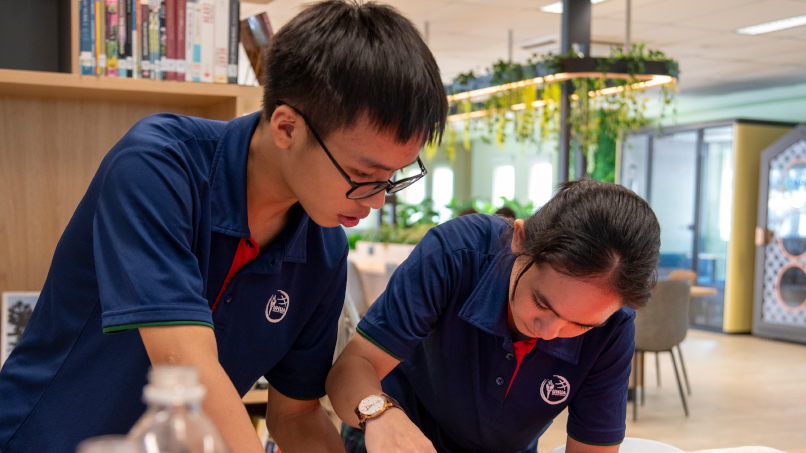
YHSS Student Ambassadors discussing the student experience at the school. Photo by Jeffrey Chan.


04 Nov 2025


“Care, connect, contribute.” At YHSS, there’s a school-wide emphasis on students’ hearts, as well as their minds. Throughout the secondary school years, these three carefully chosen guiding words provide YHSS students with a values-based compass for personal growth.
The noble vision is that every Yuhuan will use empathy and curiosity to contribute to change at school, at home, and in society. But how exactly do you shift students from passive observers to proactive changemakers? What’s the spark that can inspire young people to take the initiative to improve their communities?
YHSS provides an excellent demonstration through its Applied Learning Programme (ALP). The answer, of course, is design thinking! Titled “Yuhua Changemakers”, the YHSS ALP focuses on a progressive familiarisation with and ownership of design thinking processes. This serves as the route to developing 21st-century competencies such as empathy, communication, and critical thinking, and, thus, nurturing tomorrow’s responsible citizens.
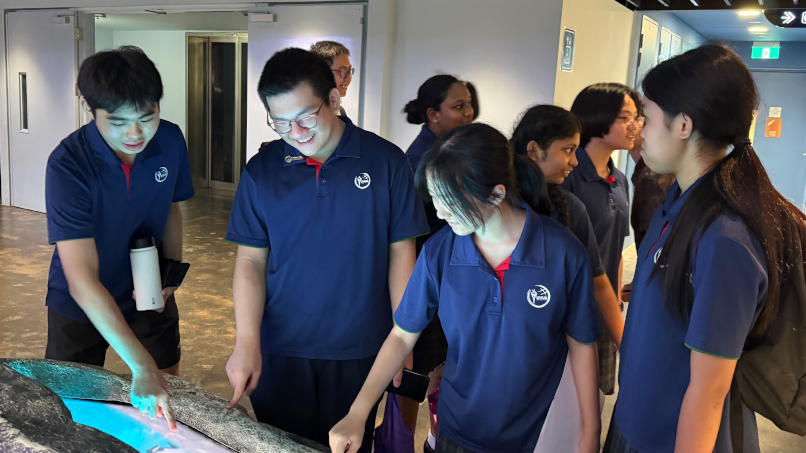
YHSS student leaders adopt a designer’s lens to analyse how Bird Paradise maximises visitor engagement while providing birds with an environment in which to thrive. Photo by Tan Chin Guan.

There’s a different ALP experience for each of the student cohorts, which makes the learning journey one that evolves each year in engaging ways.
Secondary 1: Embarking on the design thinking journey
Secondary 1 students begin with the foundation of growing the design thinking mindset in alignment with core values. Content about sustainability is introduced as part of Character and Citizenship Education (CCE) curriculum, where students learn about community needs and national issues.
Guided by design industry partner Forest and Whale, students analyse the plastic waste generated by their own daily habits and consider its adverse impact on the environment. Armed with a fresh perspective on their own impact, students hold conversations with their family members about how they might reduce household waste. This self-reflective process helps students build a confident approach to an important everyday issue.
Secondary 1 students get curious about plastic waste and explore ways to reduce their carbon footprint. Photo by Forest and Whale.
Secondary 2: Getting hands-on with design thinking processes
By Secondary 2, it’s time to begin experiencing design thinking processes through engagement with the wider community. As part of the CCE curriculum, students enjoy the opportunity to speak directly to community members via a collaboration with Bold at Work.
Each of the eight Secondary 2 classes is linked with a different community partner. After learning about the Jurong community’s needs, students develop solutions to address them using design thinking. This engaging real-world experience helps students foster a stronger sense of purpose and agency to be concerned and participative citizens who take pride in contributing back to those around them.
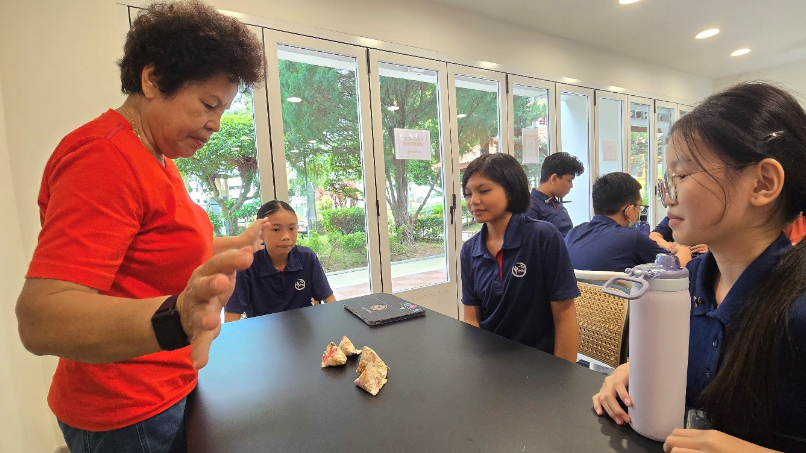
Secondary 2 students engage with members of the Jurong community to gain a better understanding of the community’s needs. Photo by Mr Fairoz.
Secondary 3: Developing self-initiated design thinking projects
What problems do the students themselves want to address? That’s the focus in Secondary 3, when design thinking is integrated with the Social Studies curriculum. Here, students apply the design thinking stages that complement the “Humanities Inquiry Approach,” including critical thinking.
Through the process of designing self-initiated projects that address real-world issues, students get the opportunity to take greater ownership of their own learning. They make personal and collective efforts to effect change for the good of society.
Secondary 4 and 5: Speaking up and co-creating using design thinking
For Secondary 4 and 5 students, as well as student leaders, the emphasis is on sharing the design thinking experience. Design thinking is embedded in the YHSS student leadership programme, with experiential learning such as field trips giving students fun opportunities to appreciate how design and design thinking are applied in real life. As a result, student leaders are better equipped to apply their design thinking skills to issues affecting the school body.
The iSAY initiative, led by the YHSS Student Council, is one avenue for them to make a difference. Harnessing empathy, collaboration, and problem solving, student leaders are empowered to voice concerns and co-create school improvements. Student leaders also work on other projects, such as promoting mental health for different segments of the student body.
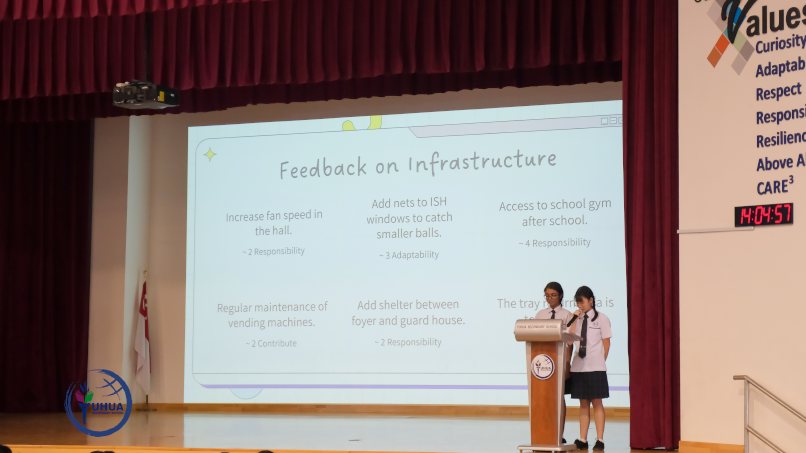
In iSAY sessions, the whole school comes together with a design thinking mindset to discuss ways to improve YHSS. Photo by Jeffrey Chan.
Cumulatively, comfort with the design thinking process builds while the gap between awareness and action narrows. “Many students see problems,” says Kevin Pang, the Principal at YHSS, “but may not act to make a difference. By bringing them through the design thinking process, we aim to build confidence, empathy, and problem-solving mindsets as the path to agency.”
That aim is being met. As YHSS reports, the Yuhua Changemakers programme has helped foster a stronger culture of care (empathy), connection (communication and critical thinking), and contribution across the school.
Says Kevin, “Students often start with a fixed mindset, unsure of how their ideas could make a real impact or feeling hesitant to speak up. Many struggle initially with identifying the real problems or connecting with stakeholders meaningfully.”
He continues, “Through the design thinking process, the students learn to embrace ambiguity, listen with empathy, and iterate without fear of failure. For example, when initial ideas do not work out, students revisit the feedback, reframe the problem, and try new approaches. This helps them grow in resilience and adaptability.”
Thanks to their ALP experience of design thinking, YHSS students have learned that small actions – such as conducting interviews, prototyping ideas, or refining their projects – can lead to meaningful change.
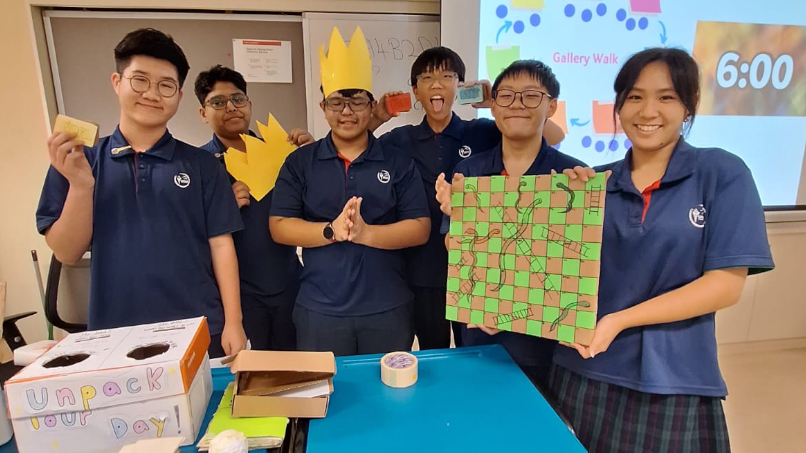
YHSS student leaders present their prototypes for addressing mental well-being issues. Photo by Loh Kai Ling.
From whole-school alignment, to industry and community partnerships, to curriculum integration, and more, the YHSS Changemakers Experience demonstrates how good organisational practices can have a lasting positive impact on students.
Programme Partner
Forest & Whale

Bold at Work
School

Yuhua Secondary School