









Transforming Uncertainty to Collective Courage and Optimism
Fuchun Primary School’s (FCP) first steps toward developing a design mindset were tinged with uncertainty. But once educators moved ahead with a shared sense of purpose and support, the outcomes surprised everyone!
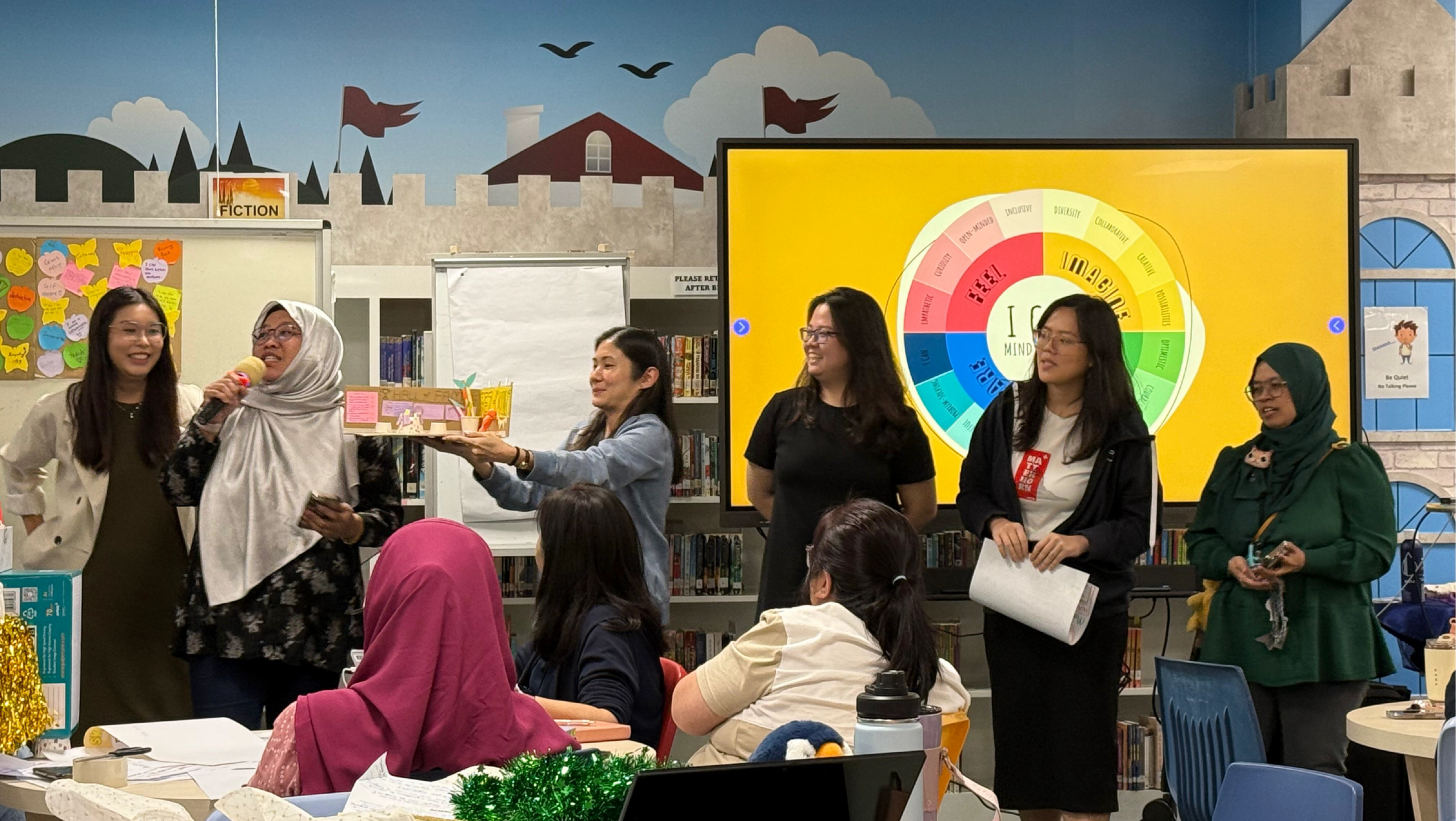
FCP educators discovered their creative confidence in a design thinking workshop that united them in working towards a common goal. Photo by Fuchun Primary School.


03 Jun 2026


It’s the nature of change that it rarely comes easily. But when we move past the fear, it’s incredible how readily we can adapt. So, what’s the secret to getting over that hump? FCP’s journey into design thinking through new interdisciplinary project work has some great lessons in collective adaptation.

At first, worries abounded. Would educators embrace the change? Would they be able to dedicate adequate time and attention? Would they feel overwhelmed? Would the curriculum be too disrupted?
They were valid questions. But FCP chose to use them as the impetus for pushing forward, not shying away from the challenges of co-creating a new curriculum. With the help of partners Design For Change, FCP began by finding solid footing through a needs analysis.
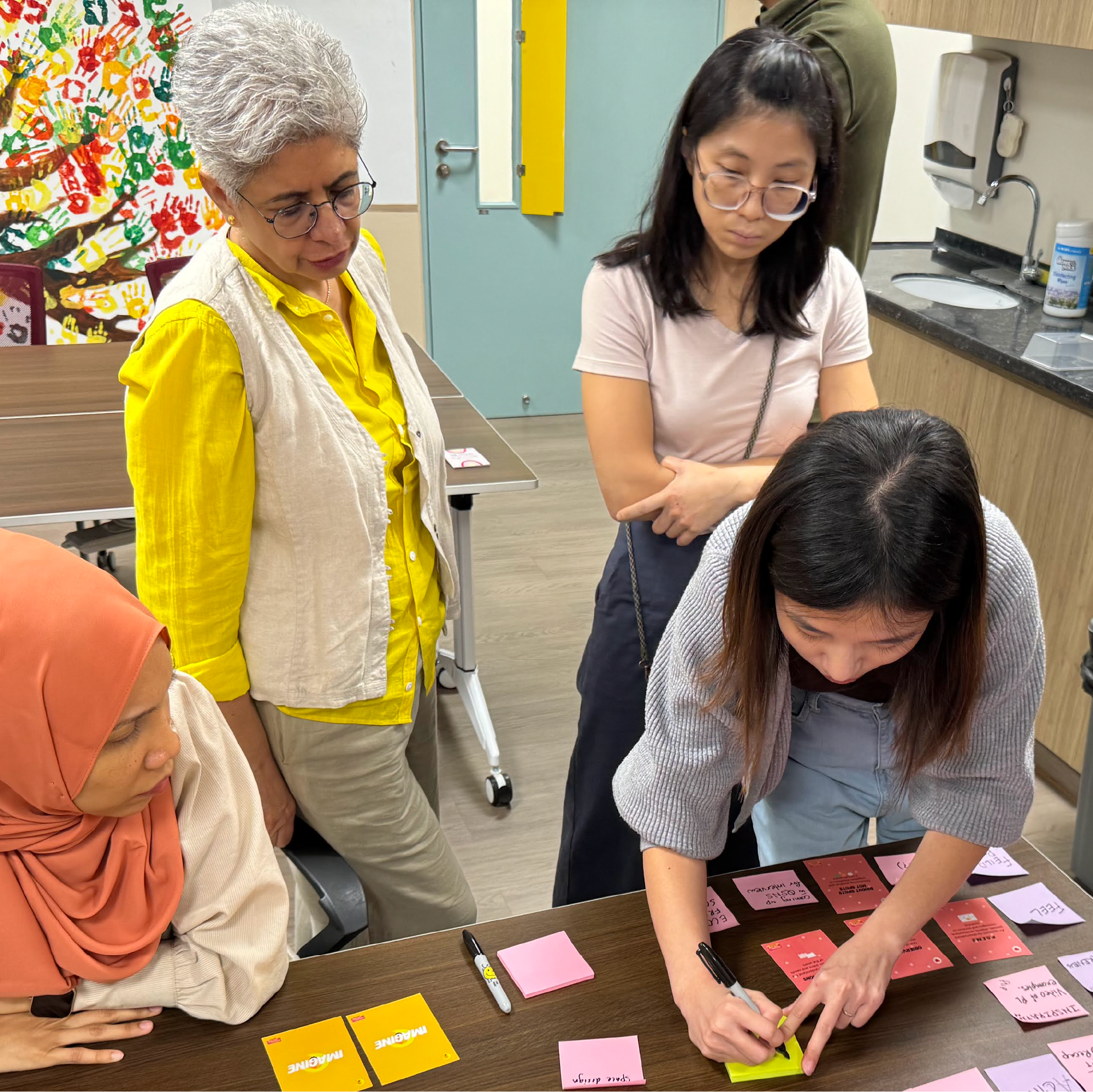
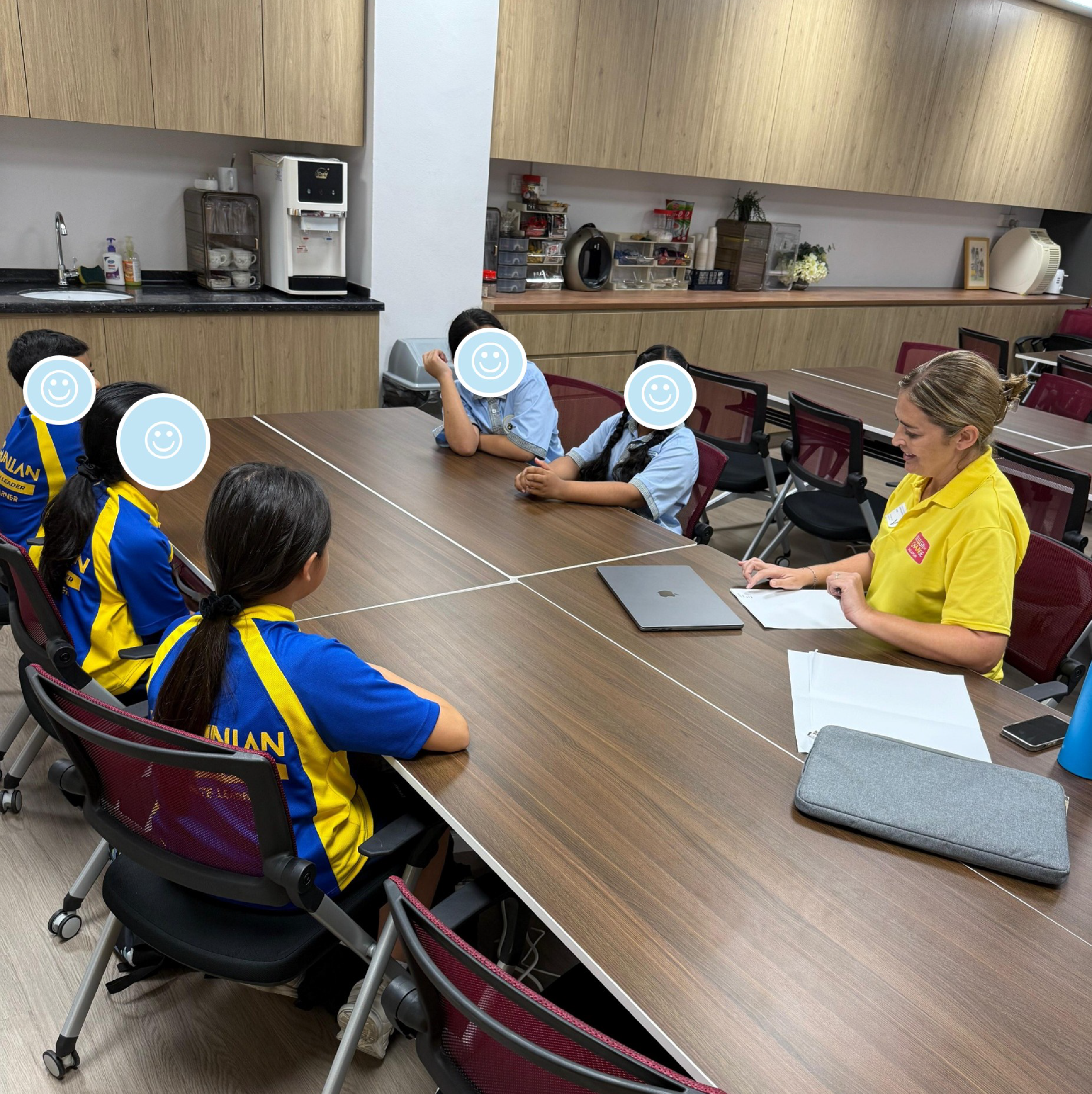
Our partners worked with staff to define needs (left) and chatted with students to find out their joys and pain points (right). Photos by Fuchun Primary School.
“We defined what success would mean to us,” explains Andy, HOD CCE at FCP. He continues, “For our educators, it was a willingness to try. For our students, it was about nurturing creativity, confidence, and finding their voice.”
All staff participated in a workshop where they were introduced to design thinking. It was a successful workshop but the success did not come from not just understanding design thinking. Rather, it was about experiencing the process together. For example, learning more about the office staff, cleaners and security guards and building empathy changed perspectives for the long term.
In the workshop, we slowed down. We asked. We listened. We felt. And it was a turning point because it reminded us about that we are more than the roles we play at work
Andy Lim
HOD CCE
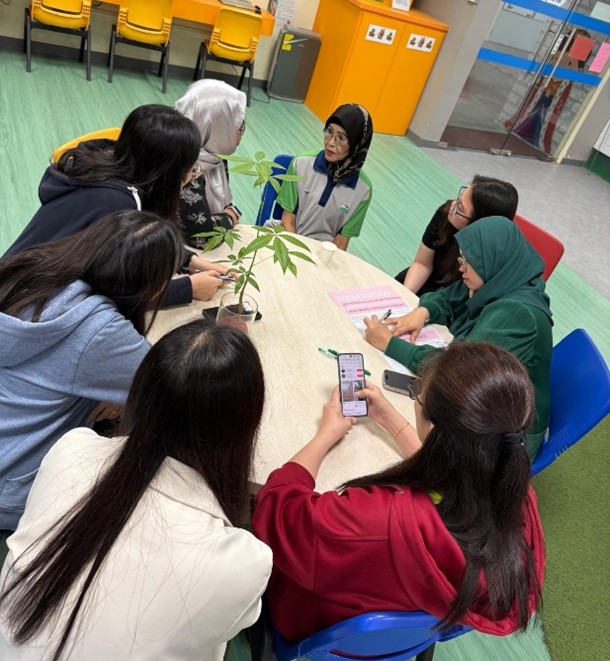
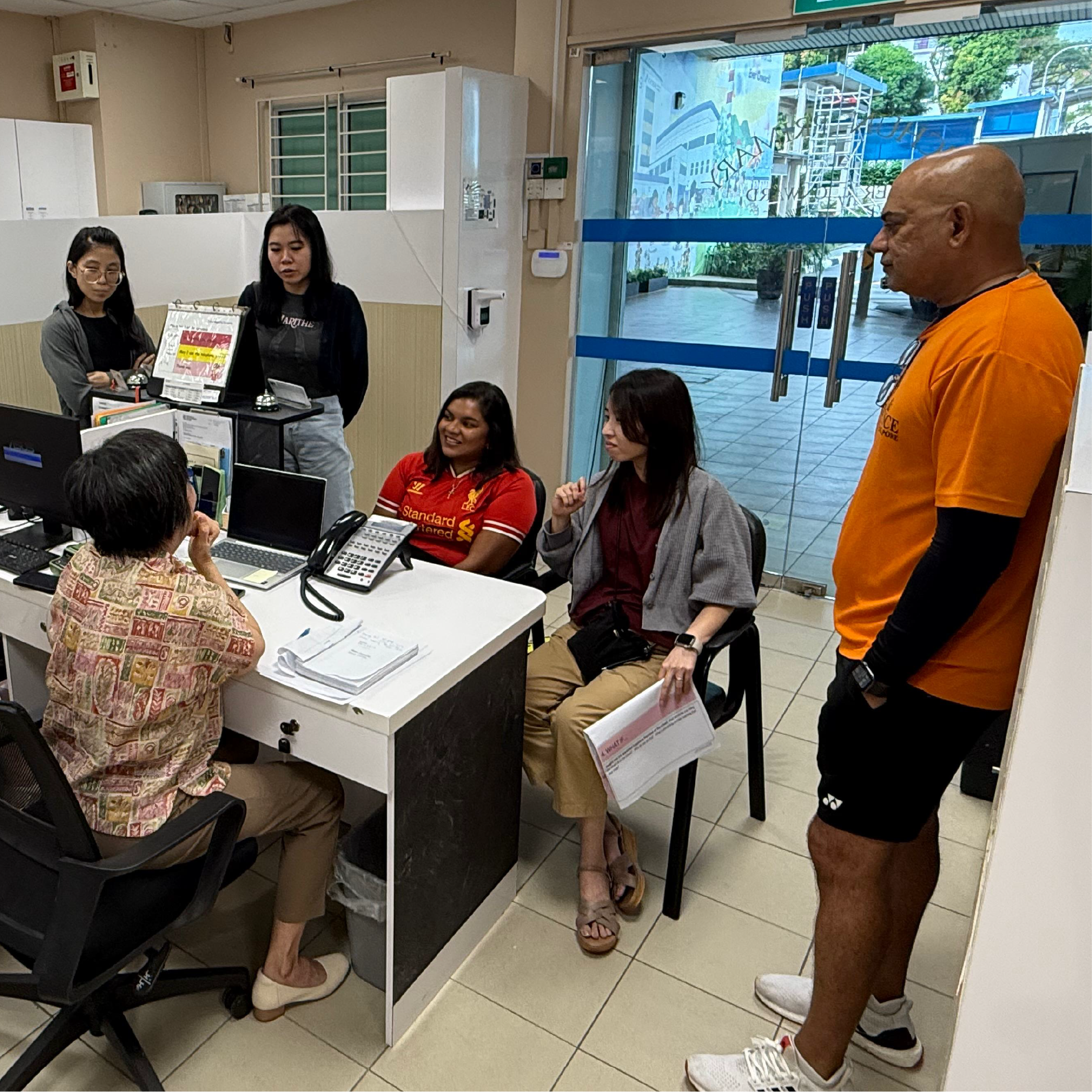
The design thinking workshop brought together the entire school staff. Positive new understandings were reached between groups. Photo by Fuchun Primary School.
Such powerful quieter moments were matched in impact by messy, loud activities that enabled educators to rediscover their own creativity. Explains Andy, “Through the workshop experience, we had fun, laughter, creative sparks, and chaos. We realised we wanted to bring that same experience to our students, too.”
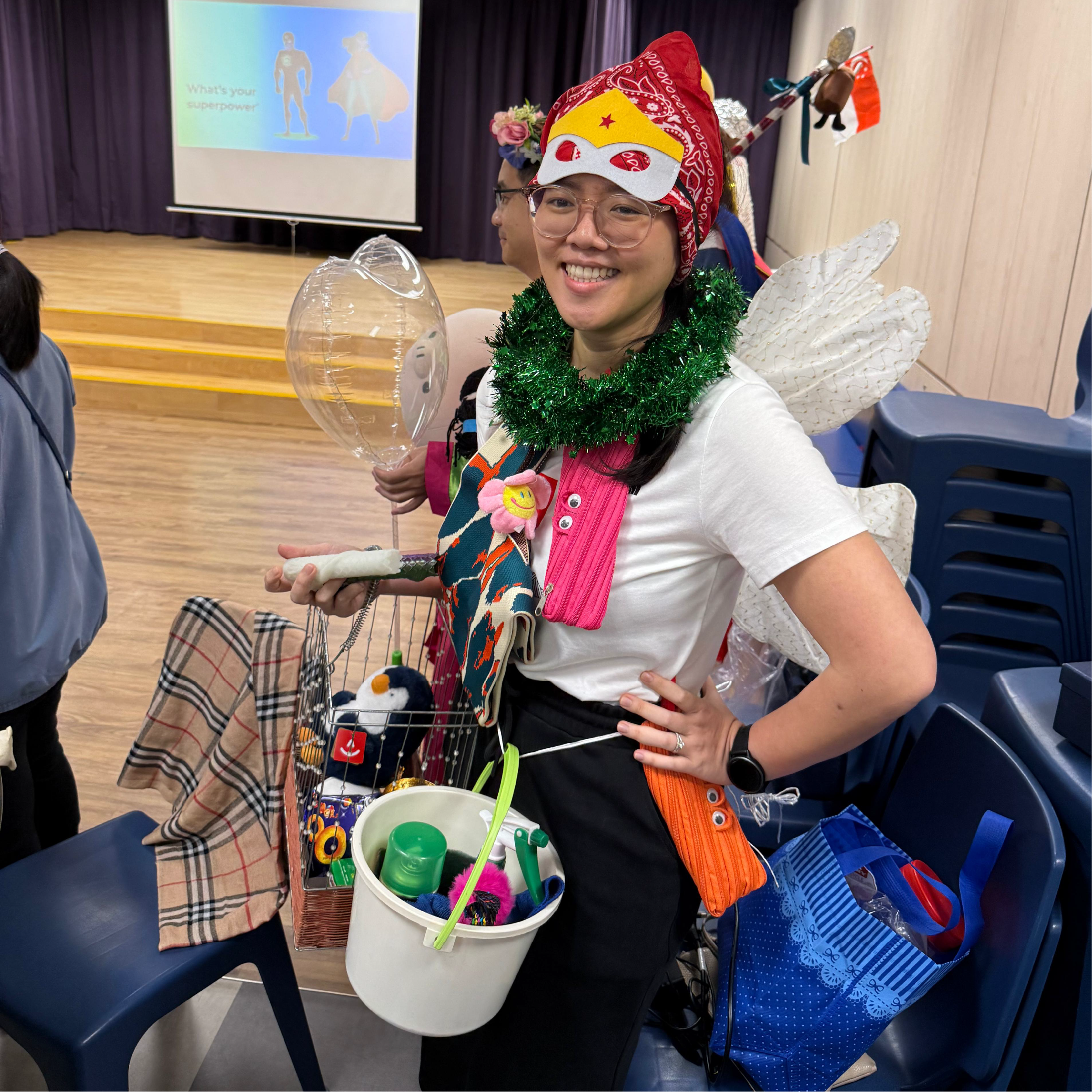
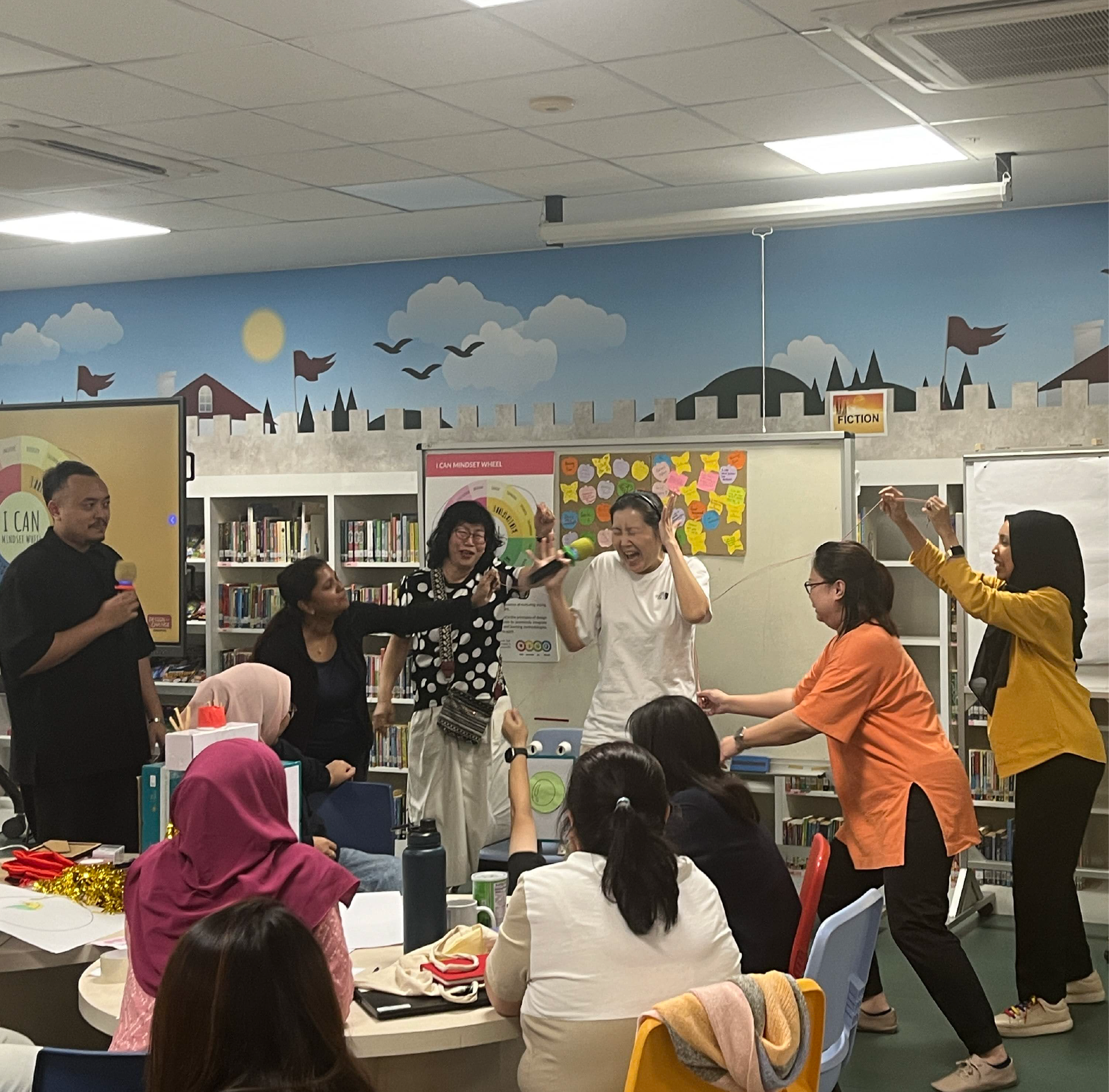
Creative, courageous, and chaotic workshop activities helped educators step out of their comfort zones and leave their worries behind. Photos by Fuchun Primary School.
Psychological safety was also being built – the awareness that design thinking project work is a space for us to be courageous enough to try, and it’s ok to make mistakes. More importantly, we all came together working towards a common goal.
Andy Lim
HOD CCE
Next, educators worked with FCP’s partners to lead Primary 4 and Primary 5 students on real challenges: creating ways to reduce waste, and designing games to enable engagement with seniors about digital literacy. With another step forward, came more uncertainties!
Would the curriculum be too difficult for some students? Would students know how to conduct interviews and create prototypes? “There was a lot of assurance needed that it would be okay if the product did not turn out as expected,” notes Andy.
It turned out that these worries were unfounded. “We saw the confidence and voice in our students that we didn’t know was there,” Andy recalls. Educators were so encouraged by the students’ natural creativity and courage to experiment, that they were willing to put in extra time and effort to provide guidance.
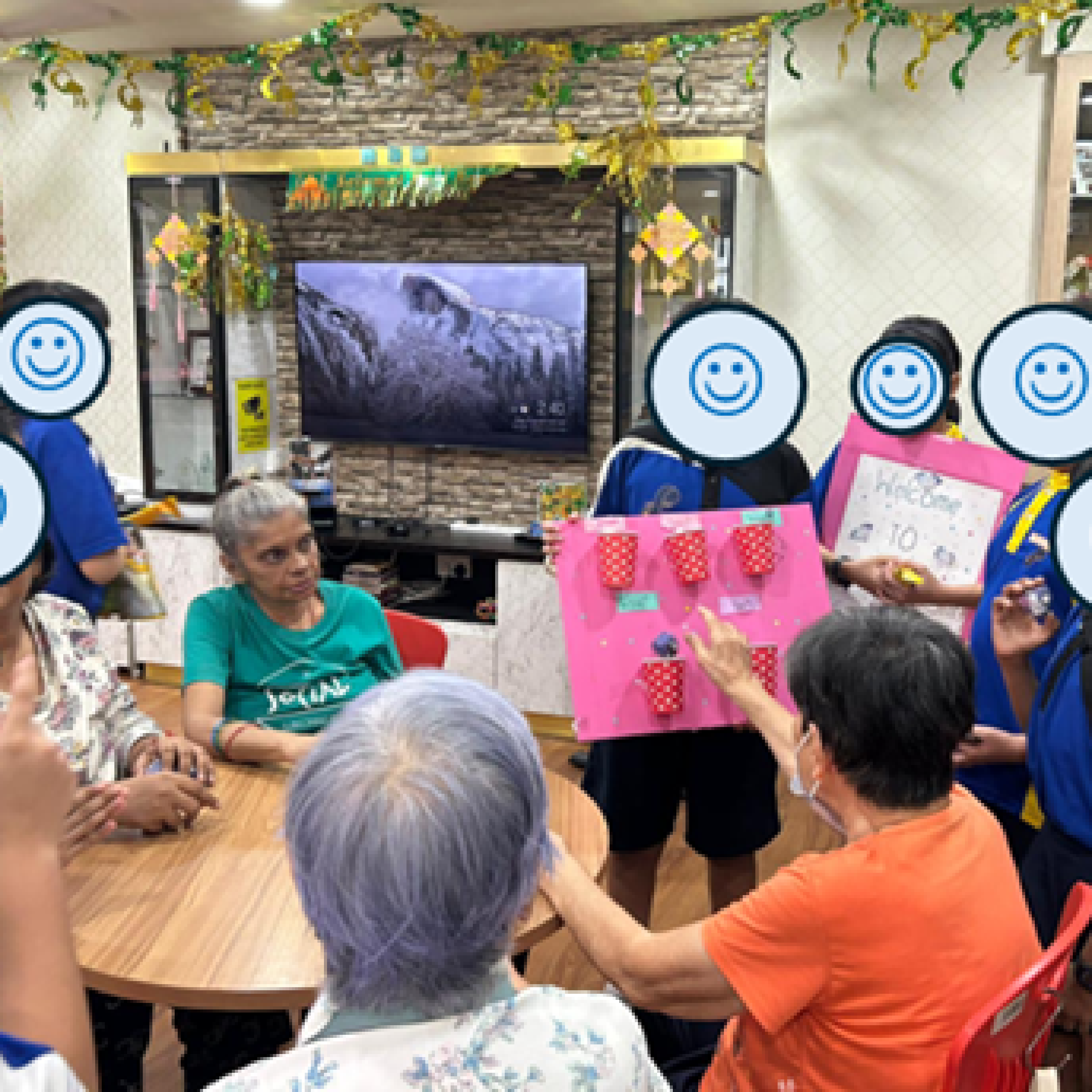
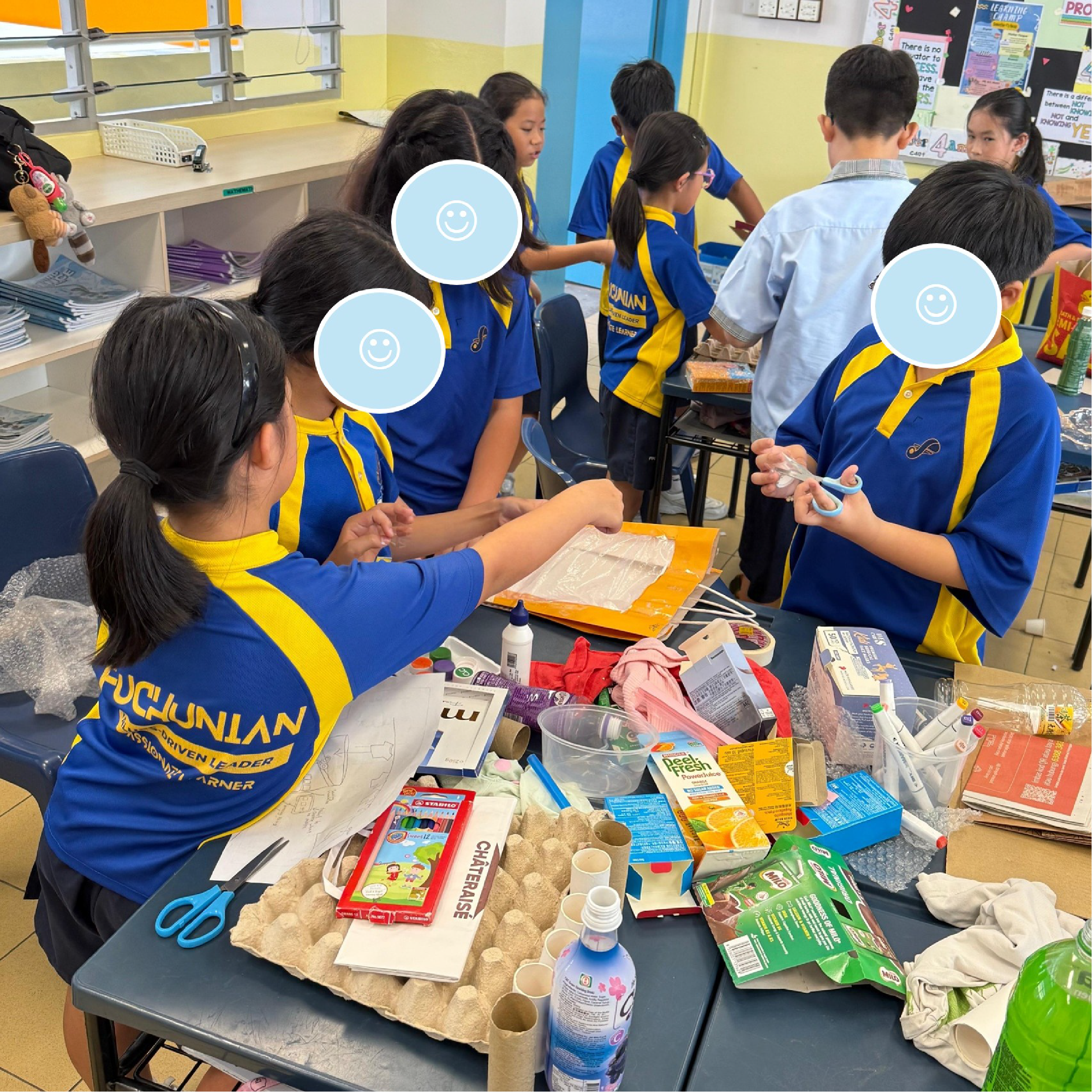
In their interdisciplinary project work, Primary 4 students designed strategies to reduce waste, while Primary 5 students found new ways to engage with seniors. Photos by Fuchun Primary School.
Practising what they learned in the staff workshop, educators worked with the partners in real time to make tweaks and ensure a meaningful learning process.
The students’ voices shone again after the conclusion of their projects, when level-wide sharing sessions were held. To the delight of educators, there was no need to prepare the students for the presentations; they rose to the occasion with ease.
Andy points to several factors as enablers of FCP’s success in leveraging design thinking. Firstly, everyone rallied around the shared purpose of developing 21st century competencies (21CC). They understood that design thinking is an effective vehicle to develop our students’ Adaptive Thinking – one of our school’s 21CC priorities. Beyond that, trust and psychological safety were built by FCP leaders through reassuring educators, being open to feedback, modelling vulnerability, and being present on the ground.
With the mentality of being in it together, everyone felt a sense of collective efficacy. “No one felt alone in taking risks,” says Andy. “We didn’t know all the answers, but we trusted we could adapt and succeed together,” he adds. The safety net was acting together to make change.
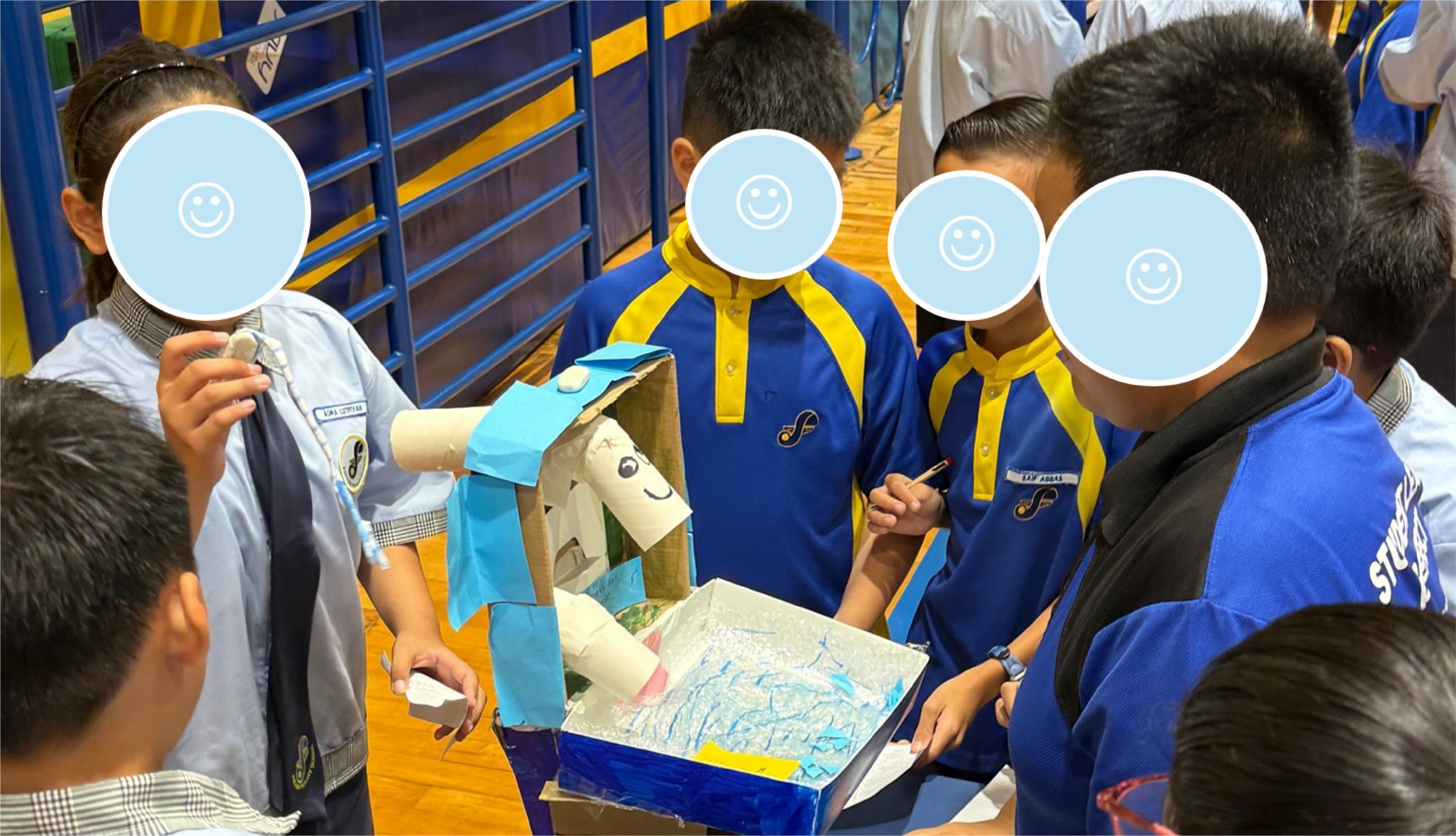
The P4 students impressed educators with their confidence when sharing their projects with their peers. Photo by Fuchun Primary School.
Our enablers – psychological safety, shared purpose, and leader modelling – turned uncertainty into collective courage, and we saw the result: confident, proud, fully engaged students who grew through the process.
Andy Lim
HOD CCE
Armed with a strong sense of readiness, courage, and community, FCP is looking to continue their successful endeavour with design thinking by carefully scaling the programme throughout Primary 5. Onward they go, together.
You might also like
Local
For Principal Rebecca Chew, design thinking is the way ahead
03 Dec 2024
Local
The creative ally that reshaped a school’s Applied Learning Programme
16 Jan 2025
Local
The Vice Principal who inspires innovation through empathy
30 Jun 2025

Media
Better Life by Design Ep. #1: Umbrella for Uncle Soh
How does this umbrella designed by the students of Cedar Girls Secondary School help their elderly neighbour? Hint: It does more than protect him from the sun and rain. Watch the video to find out exactly what the girls have been up to!
19 Nov 2024


