





What might we discover when we make space for every voice?
At Bukit Batok Secondary School (BBSS), empathy isn’t just a design tool – it’s the foundation of community building. By truly listening, students created designs for a community hub on campus that honours heritage while shaping future-ready learning spaces.
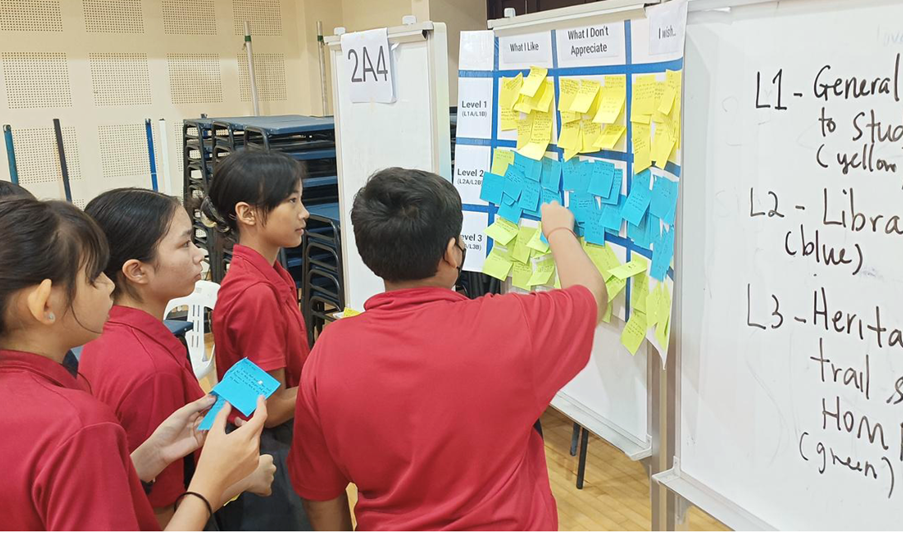
Secondary 2 students at BBSS embarked on the project “Redefining Connections – Transforming our Library and Plaza”. Photo by Bukit Batok Secondary School.


07 Aug 2026


Problem Statements
1
How might we nurture empathy and community building through design thinking?
There’s a big emphasis on community at BBSS, and the reason is simple: nurturing empathy. To achieve cohesion as a group and successfully collaborate, it’s vital to be able to see things from the perspectives of others.
Empathy is a key design mindset. That’s why BBSS introduced design thinking to its Applied Learning Programme (ALP). Through DesignSingapore Council’s Learning by Design programme, BBSS collaborated with partner, Arkki, to help Secondary 2 students and educators flex their empathising muscles while generating ideas for a new community hub on campus.
The project involved reimagining the plaza and library as a shared space for BBSS students and staff. For decades, these areas had been central to school life – places where friendships flourished and stories unfolded. How could they better support the learning ecosystem of the 21st century
Spoiler alert: After professional tweaks, some of the students’ ideas will actually be built!
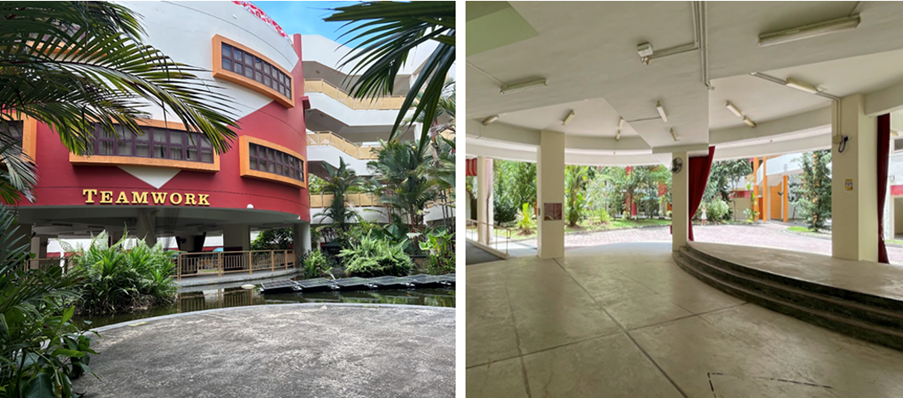
Views of the library and plaza at BBSS in their present format. Photos by Bukit Batok Secondary School.

Prior to the project, educators’ observations of the Secondary 2 cohort revealed some key areas needing development for the growth of empathy:

Students often projected their own experiences, preferences, and assumptions onto others, rather than truly understanding different viewpoints.
Emotional intelligence and sensitivity were still developing. This made it difficult to respond appropriately to the emotional states and needs of others.
Students lacked skills in research and inquiry, so they were over reliant on assumptions.
There was a tendency to look immediately for solutions, rather than focusing on user needs right through the process.
Students struggled with active listening, creating space for diverse perspectives, and building on each other’s ideas constructively.
There was much work to be done! Educators would be the bridge for student development, so the process began with them.
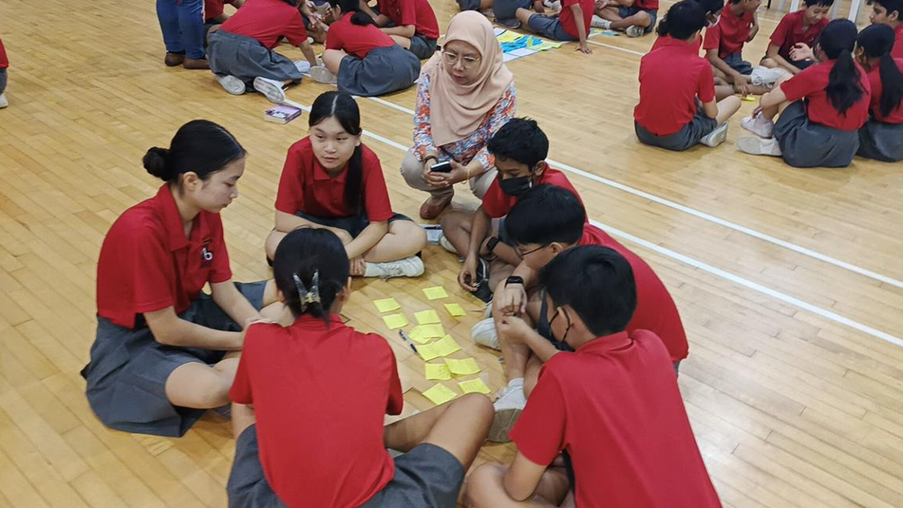
Educators supported the students with their empathy building during the project. Photo by Bukit Batok Secondary School.
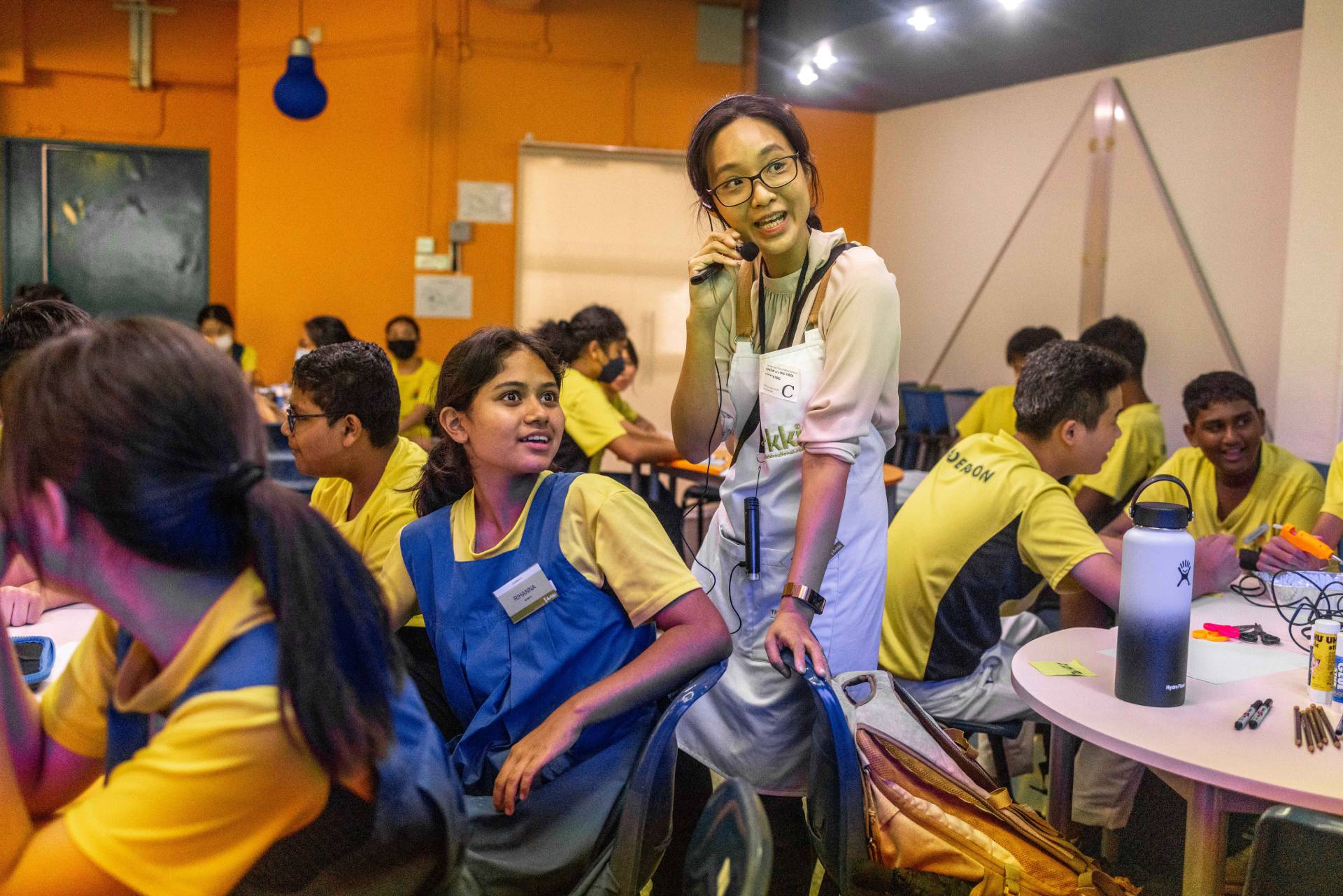
A design thinking workshop for educators was fertile ground for learning new skills and getting acquainted with the process students would use during the ALP. Through a collaborative and immersive experience programme partner, The Possible Class, guided educators to respond to same design challenge as the students.
Trainers were deliberate in building a collaborative environment where the workshop was a space to think aloud, test boldly, and practise ideation without judgment. Educators had the opportunity to provide their input on the various design ideas proposed by their peers – to bring their thoughts, concerns, and sentiments to the table.
It enabled them to practice their empathy. This would be useful when it came to supporting student growth.
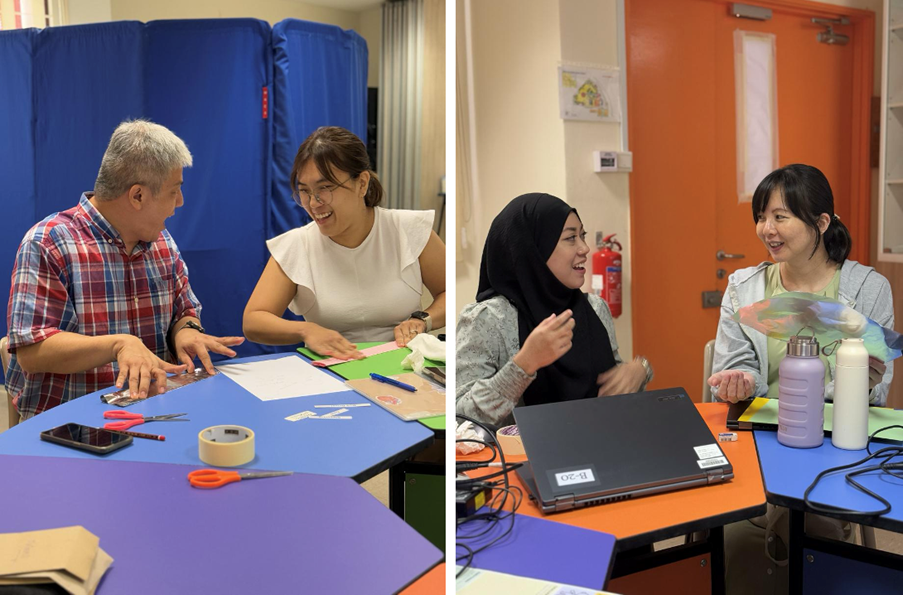
In their preliminary workshop led by The Possible Class, educators experienced what their students soon would – a collaborative and respectful learning environment. Photos by Bukit Batok Secondary School.
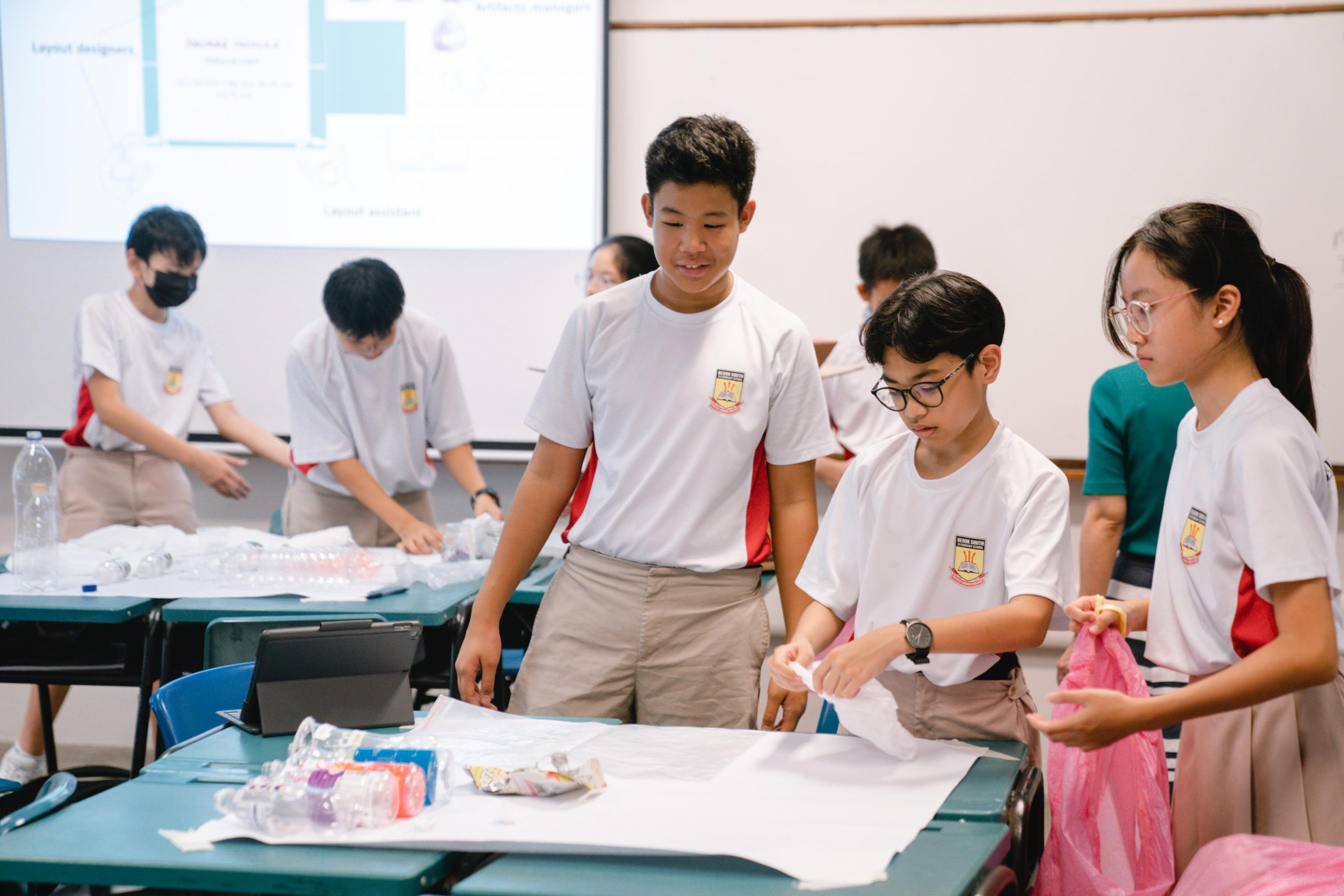
With the support of educators, The Possible Class led students on an “ideathon”, a cohort-wide user data-gathering exercise. They probed what people liked and disliked about the library, plaza, and adjacent areas, as well as what they wished for the spaces.
Empathy deepened as students became better at listening to stakeholder stories. Observing how people use these spaces and hearing about their emotional connections to them had helped students understand what different users needed.
Then, educators gave detailed feedback. Subsequently, surveys and interviews were conducted with other year levels to gather more input that would help students refine their initial ideas.
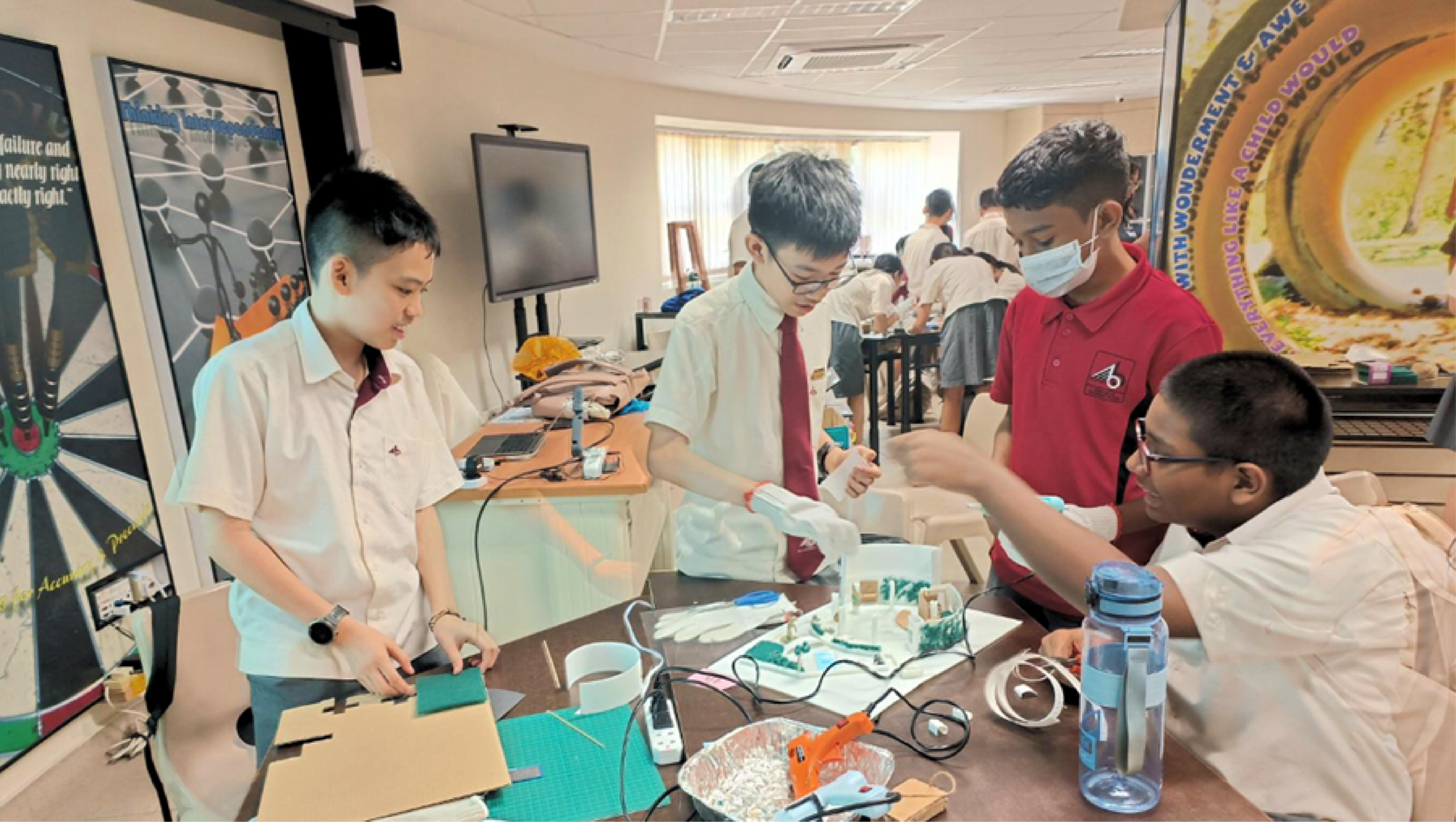
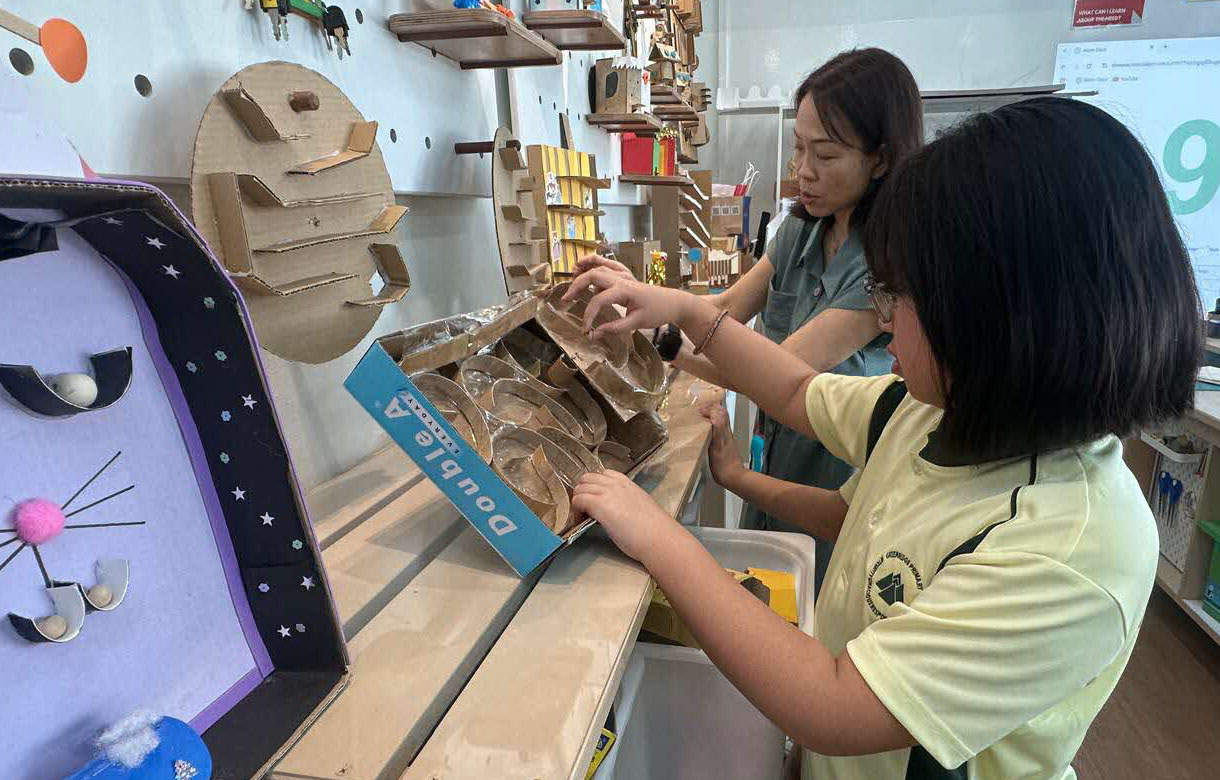
Ideating and prototyping were collaborative experiences for the students. Photo by Bukit Batok Secondary School.
Next came in-depth ideation. As students were guided through the design thinking process, educators observed again that empathy was building. They saw the openness of the students with regard to sharing their ideas and listening to one another. Students showed their capacity to recognise the emotional state of others.
Testing their ideas was done through a feedback-gathering process in which students heard not only from their peers and educators, but also stakeholders from the library unit at Ministry of Education (MOE) and parents. This was an opportunity for students to present to and engage with other user profiles, practicing their listening skills as they did.
Reimagining a shared space for the school was an ideal way to practice empathy while reinforcing community. Students’ creative solutions honoured the past while embracing future learning needs. They were truly designing a community hub by the community, for the community.
The entire school is excitedly awaiting the implementation of their ideas.
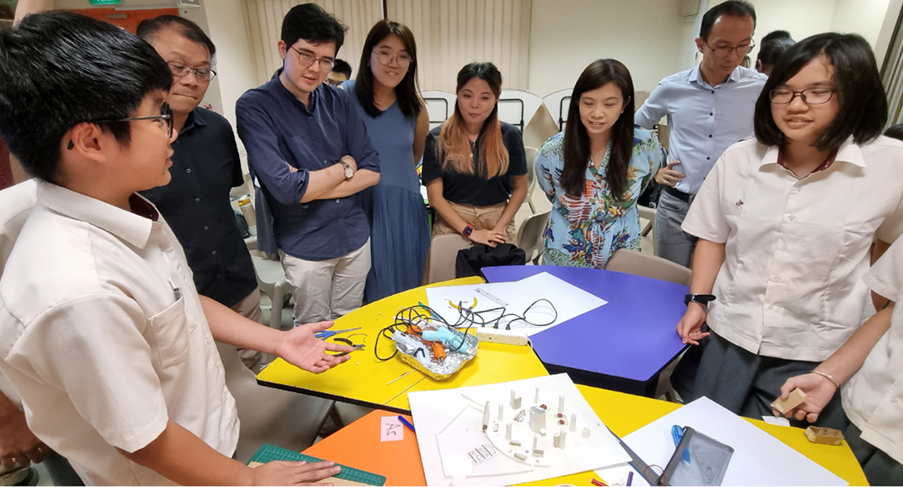
Gathering – and listening to – feedback was a constant process throughout the project. Photo by Bukit Batok Secondary School.
Hear from the educators!
Students learned how to genuinely take perspectives, and they became sensitive to recognising the user’s emotional state in relations to their needs.
Mr Ng Boon Chong, then-HOD
Bukit Batok Secondary School
The students demonstrated confidence, a willingness to explore, and the ability to share their thoughts openly.
Ms Marie Tiong, Educator
Bukit Batok Secondary School
There was active participation by each and every student. They communicated and verbalised their ideas. Within each group, they took on different roles, such as model makers, or observers who provided suggestions.
Mdm Rezwanna, Educator
Bukit Batok Secondary School
The students listened with understanding as our stakeholders asked questions about their projects and gave suggestions, displaying a high level of respect and humility.
Mr Chua, Educator
Bukit Batok Secondary School
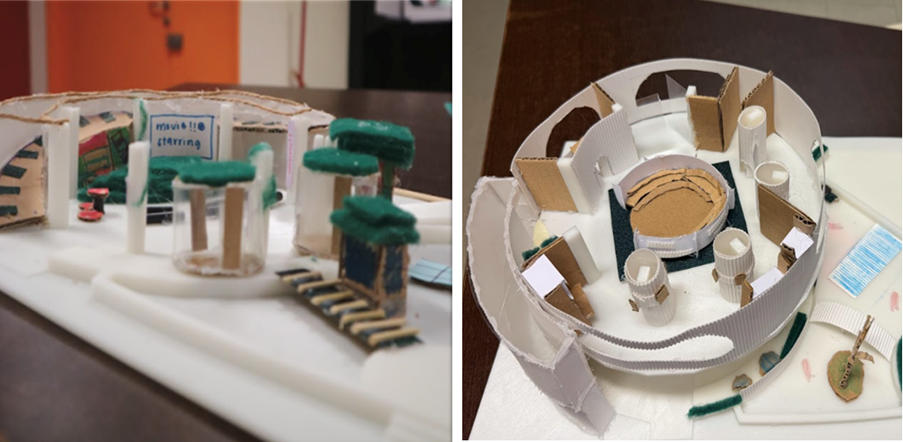
Models made by the students showcase their ideas for the new community hub. Photos by Bukit Batok Secondary School.
Hear from the students!
I learnt to think about things in a different way. I learnt to work with others and listen to others’ ideas. I learnt that sharing is important. We need to share our ideas so that others will know what we are doing.
Cao Yuting, Secondary 2
Bukit Batok Secondary School
I learnt about other people’s perspectives.
Ayyakkannu Kasturi Raja, Secondary 2
Bukit Batok Secondary School
I learnt from the MOE director about the different technologies that can be used in a library to improve convenience and the amount of people moving in and out of the library. Also, I learnt about how to communicate effectively and do teamwork. Lastly, I learnt how to create a mood board from the trainers, and what it is for.
Brian Ng, Secondary 2
Bukit Batok Secondary School
I learnt how to listen to other’s opinions and how to fix different issues.
Emily Han, Secondary 2
Bukit Batok Secondary School
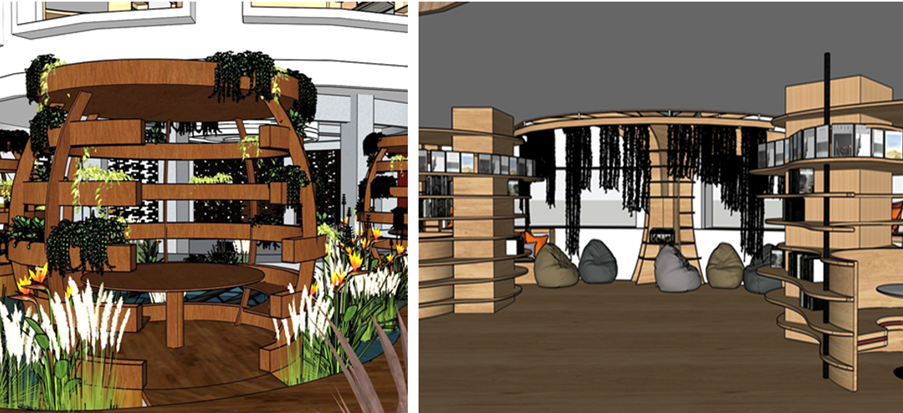
Student ingenuity was translated into workable preliminary designs through professional architectural renderings. Images by Arkki.
Learning environment
Reimagining the school environment;
Learning taken into a real-world physical environment;
Learning designed to connect knowledge with lived experiences and character formation; and
Culture of collaboration among students and with broader school/education community.
Ecosystem support
Industry partnership with The Possible Class;
Capability building for educators through training workshop with The Possible Class; and
Engagement of parents and MOE Library Unit staff as stakeholders.
Pedagogy
Collaborative learning experiences that foster empathy and community building;
Real-world project work with concrete outcomes to follow; and
Connection to the needs of 21st-century learning.